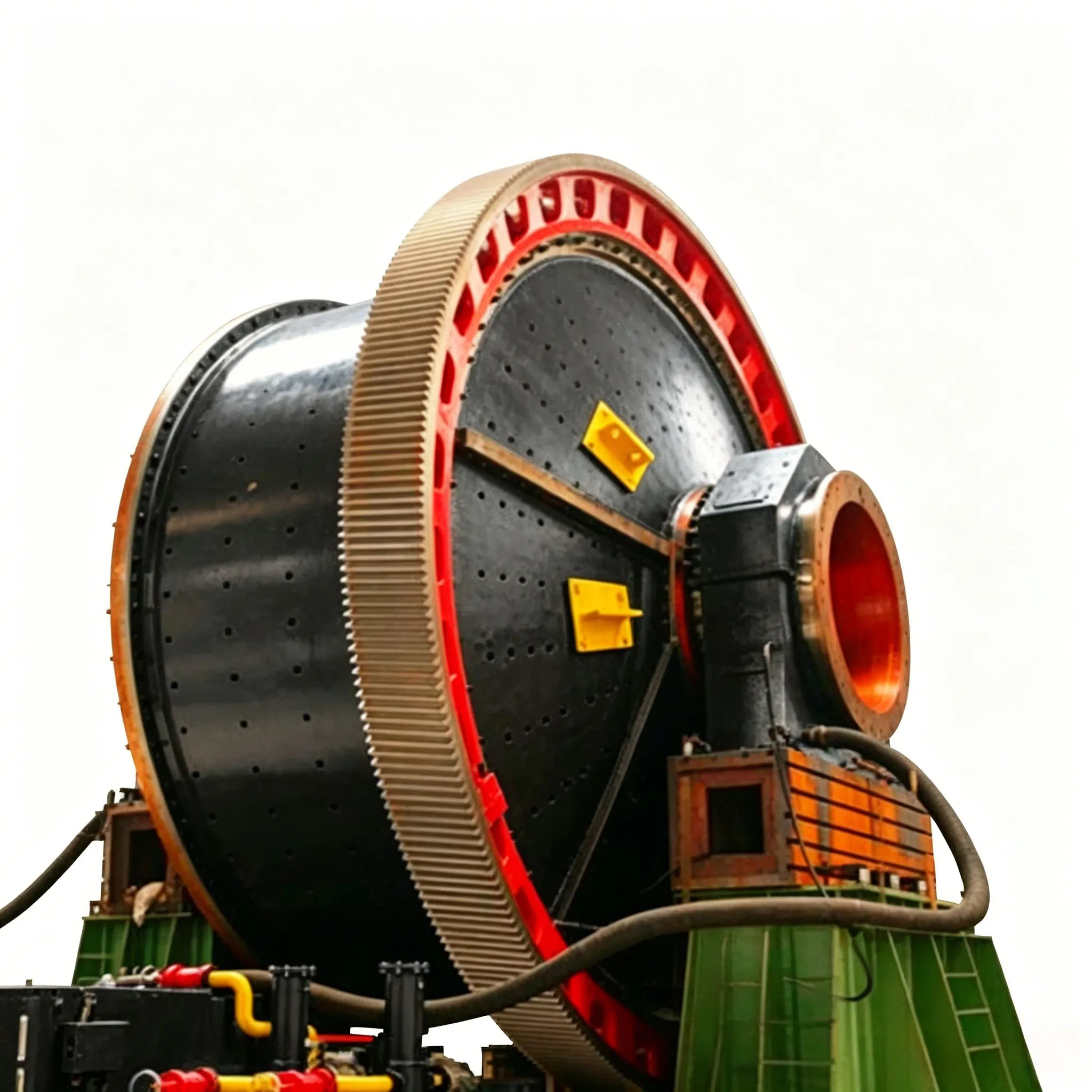
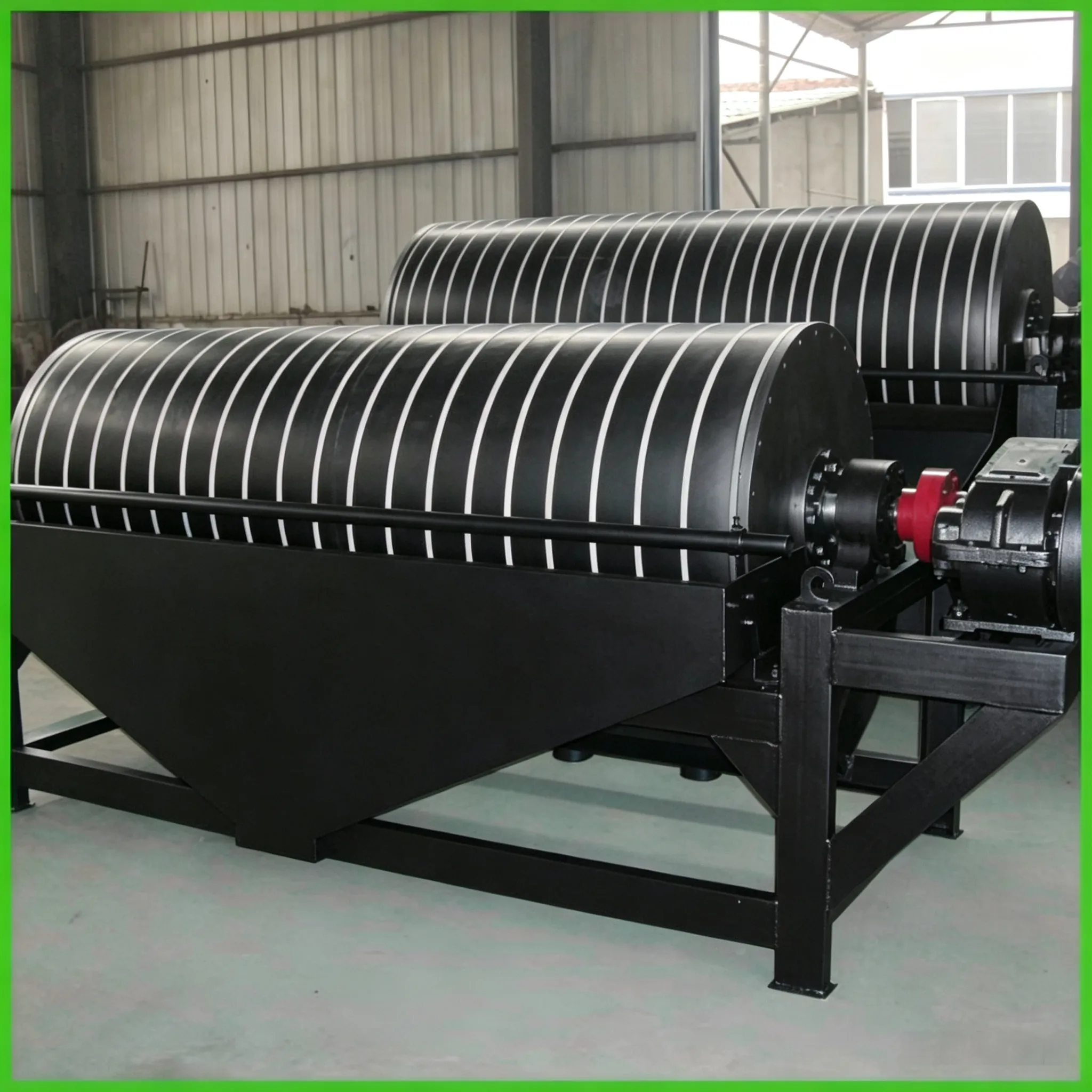
Autogenous Mill
Working Principle of an Autogenous Mill The grinding process of an autogenous…

Using gold tailings from the Jiaojia Gold Mine and adding a small amount of local low-cost clay, the Shandong Institute of Building Materials has developed ceramic wall and floor tile products that meet national standards.
The main raw materials are gold tailings and Fangzi clay. The tailings, from the Jiaojia Gold Mine, mainly contain quartz, feldspar, sericite, andalusite, etc. Fangzi clay is a local clay; if sourcing is difficult, other similar clays can be used as substitutes. The production process is: batching → water addition and mixing → wheel milling and pulverizing → material conditioning → molding using a 100-ton friction press → drying in a roller dryer (60 min) → biscuit firing in a roller kiln (90 min) → biscuit inspection → glazing → glaze firing in a roller kiln (90 min) → inspection and packaging.
In the batch, Fangzi clay accounts for 18%; the tailings have a moisture content of about 8%–17%, and the amount of added water can be adjusted during production as needed. Both biscuit and glaze firings are carried out in a 50 m coal-fired roller kiln, with a total firing cycle of 90 min and a firing temperature of 1140–1180°C. The glaze formulation is shown in Table 5-7.
Table 5-7 Glaze formulation (wt.%)
| Name | Feldspar | Quartz | Kaolin | Limestone | Fluorite | Calcined ZnO | Zircon sand | Frit | Calcined talc |
|---|---|---|---|---|---|---|---|---|---|
| Base glaze | 40 | 21 | 12 | 4 | 5 | 4 | 5 | 3 | 6 |
| Cover glaze | 46 | 11 | 5 | 5 | 3 | 3 | 10 | 11 | 6 |
In actual production, manufacturers can choose different colored glazes and artistic glazes according to market conditions and customer requirements, thereby increasing product added value. Tests have shown that the physical and mechanical properties of the fired products comply with relevant national standards, and their dimensions and appearance quality also meet national standards.
Producing ceramic wall and floor tiles from gold tailings, compared to producing non-fired cement bricks, has lower cost and higher selling price, opening a new pathway for tailings utilization.
The project “Research on Developing New Series of Wall Materials Using Gold Tailings” (Project No. TM94J5) under the Shandong Provincial Education Commission’s Science and Technology Development Plan passed technical appraisal in May 1996. This project used gold tailings as the main raw material to develop and produce autoclaved standard bricks and tongue-and-groove bricks.
A. Production Process
The main raw material selected for this project is gold tailings from a rock gold mine. The production process flow for autoclaved standard bricks is shown in Figure 5-5. The production process for autoclaved tongue-and-groove bricks from gold tailings is the same as in Figure 5-5, except that instead of a rotary table brick press, an HQY hydraulic floor tile press is used, equipped with brick molds of different specifications.
B. Process Conditions
To ensure the strength of the products, the molar ratio of water-soluble SiO₂ in the tailings to soluble CaO in the lime should generally be approximately 1:1. The material mixing ratios are:
(1) Tailings: 89%–91%
(2) Quicklime: 8%–9%
(3) Gypsum: 0.5%–1%
(4) Crystal seeds: 0.2%–0.5%
Under the same molding pressure, coarser tailings result in denser products with higher strength. The main reason is that during mixing, a large amount of air is inevitably entrained into the material. When pressed, this air is rapidly compressed, and after the pressure is released, it rebounds, damaging the green brick structure. However, when the material particles are coarser, some air can escape through the interparticle voids, thereby reducing the rebound effect.
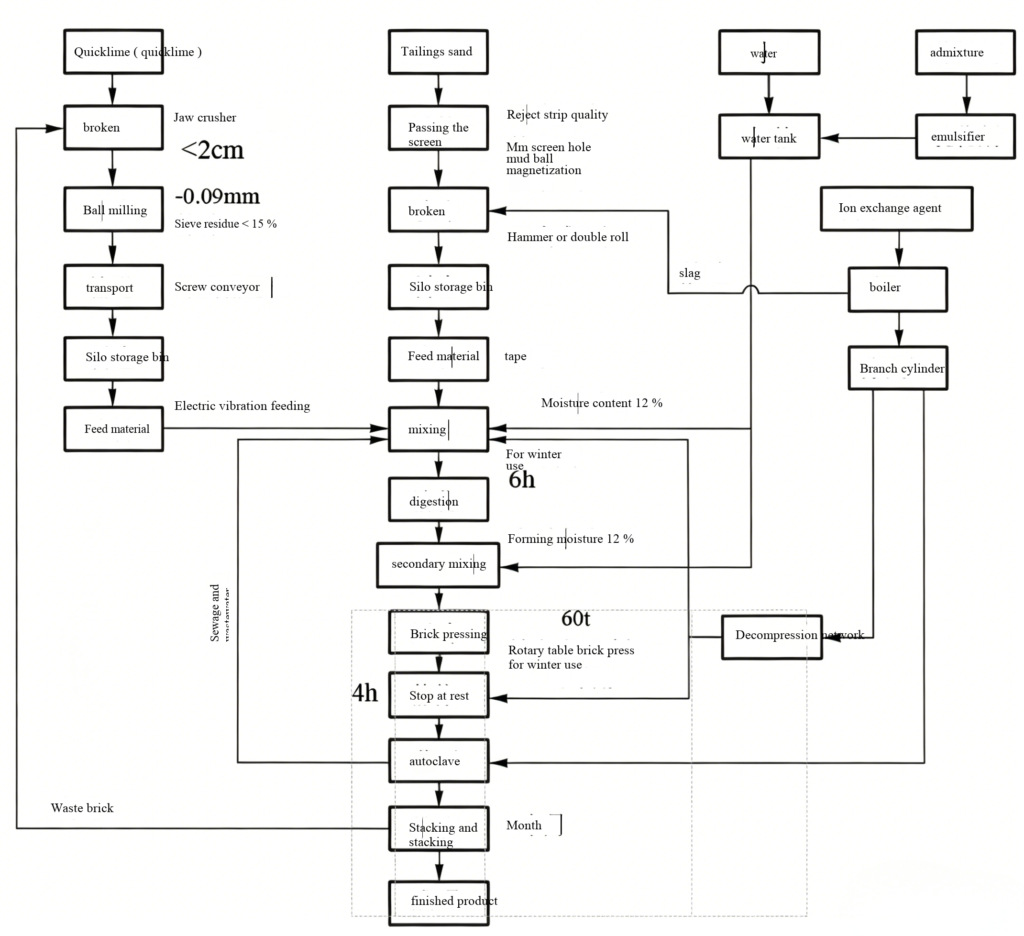
Figure 5-5 Process flow of the gold tailings brick plant
C. Steam Curing Regime
The so-called autoclave curing regime mainly includes the heating rate, maximum temperature and holding time, cooling rate, and later stacking environment. Through experimental research and economic-technical comparison, the optimal curing regime for tailings bricks is shown in Table 5-8.
Table 5-8 Optimal curing regime for tailings bricks
| Curing stage | Temperature range / °C | Curing time / h |
|---|---|---|
| Static resting | 25–45 | 4 |
| Temperature rise | 25–191 | 0.5 |
| Constant temperature | 191 | 2.5 |
| Natural cooling | 191–120 | 2.5 |
| Forced cooling | 120–60 | 1.5 |
| Ambient temperature curing | >0 | 720 |
The finished products meet the quality standard FB11945‑89 after testing.
Using gold mine slag as the main raw material and adding some clay with good plasticity and color (purple clay), the Dandong Building Materials Research Institute has developed a new type of architectural decoration material – waste mine slag facing bricks. These facing bricks can be used for exterior wall and floor decoration. They feature low water absorption, high strength, good acid and alkali resistance, excellent resistance to thermal shock, and good freeze-thaw performance. Small-scale test results show that the product performance meets and even exceeds the technical standards for facing bricks.
A. Raw Materials
Wulong Gold Mine slag was selected as the waste material, with a fineness of 97% passing 0.074 mm. Its chemical composition is: SiO₂ 79.11%, Al₂O₃ 8.92%, Fe₂O₃ 3.5%, CaO 0.60%, MgO 3.16%, loss on ignition 2.0%.
Because the waste slag has poor plasticity and an undesirable color, a portion of clay is added to overcome these shortcomings when making facing bricks. Purple clay from Xiaoyingzi and Huajingou in Kazuo County and Huolianzhai in Benxi is used as a raw material. The incoming clay is ground in a ball mill to a fineness of 97% passing 0.074 mm. Its chemical composition is: SiO₂ 60.7%, Al₂O₃ 15.5%, Fe₂O₃ 6.02%, CaO 3.45%, MgO 1.21%, loss on ignition 9.67%.
Through experiments, the ideal formulation for waste slag facing bricks is: waste slag : purple clay = (60–65) : (40–35).
B. Production Process
The trial production process flow for waste slag facing bricks is shown in Figure 5‑6.
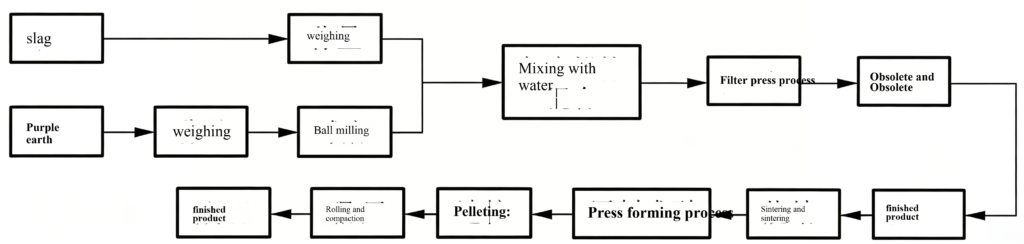
Figure 5-6 Trial production process flow of waste slag facing bricks
C. Process Conditions
The mixture must have a proper particle size distribution and high density. The particle fineness is controlled such that 97%–98% passes 0.074 mm. The aged material is rolled and sieved to form granules of 0.25–2 mm, with an appropriate proportion of coarse, medium, and fine granules.
Water content should be controlled at 5%–7%, and the moisture must be evenly distributed.
The molding pressure and pressing time should be reasonably controlled to ensure smooth air evacuation.
Drying regime: Drying temperature is controlled at 60–80 °C, with a typical drying time of 3–4 hours. The green body must be heated evenly during drying to prevent cracking due to uneven shrinkage, and the body should be placed steadily to avoid deformation.
Firing regime: During the low‑temperature stage of firing, the heating rate can be relatively fast. In the oxidation‑decomposition stage (600–900 °C), strong oxidation measures and appropriate control of the heating rate are applied to facilitate carbon oxidation and salt decomposition. In the vitrification stage, from 900 °C to the firing temperature (1100–1120 °C), the temperature rise should be slow, the excess air coefficient increased, and oxidation holding measures adopted. The high‑temperature holding time is 1.5 hours. During the cooling stage, rapid cooling should be avoided.
The resulting facing bricks have a bulk density of 2.19 g/cm³, water absorption of 6.07%, and flexural strength of 26.85 MPa. Their freeze‑thaw resistance, thermal shock resistance, aging resistance, and other properties all exceed the specified standards.
 English English
  Spanish
 Russian
 Arabic
 Swahili
 French
 Turkish
 Portuguese
 Korean
 Japanese
 German
 Italian