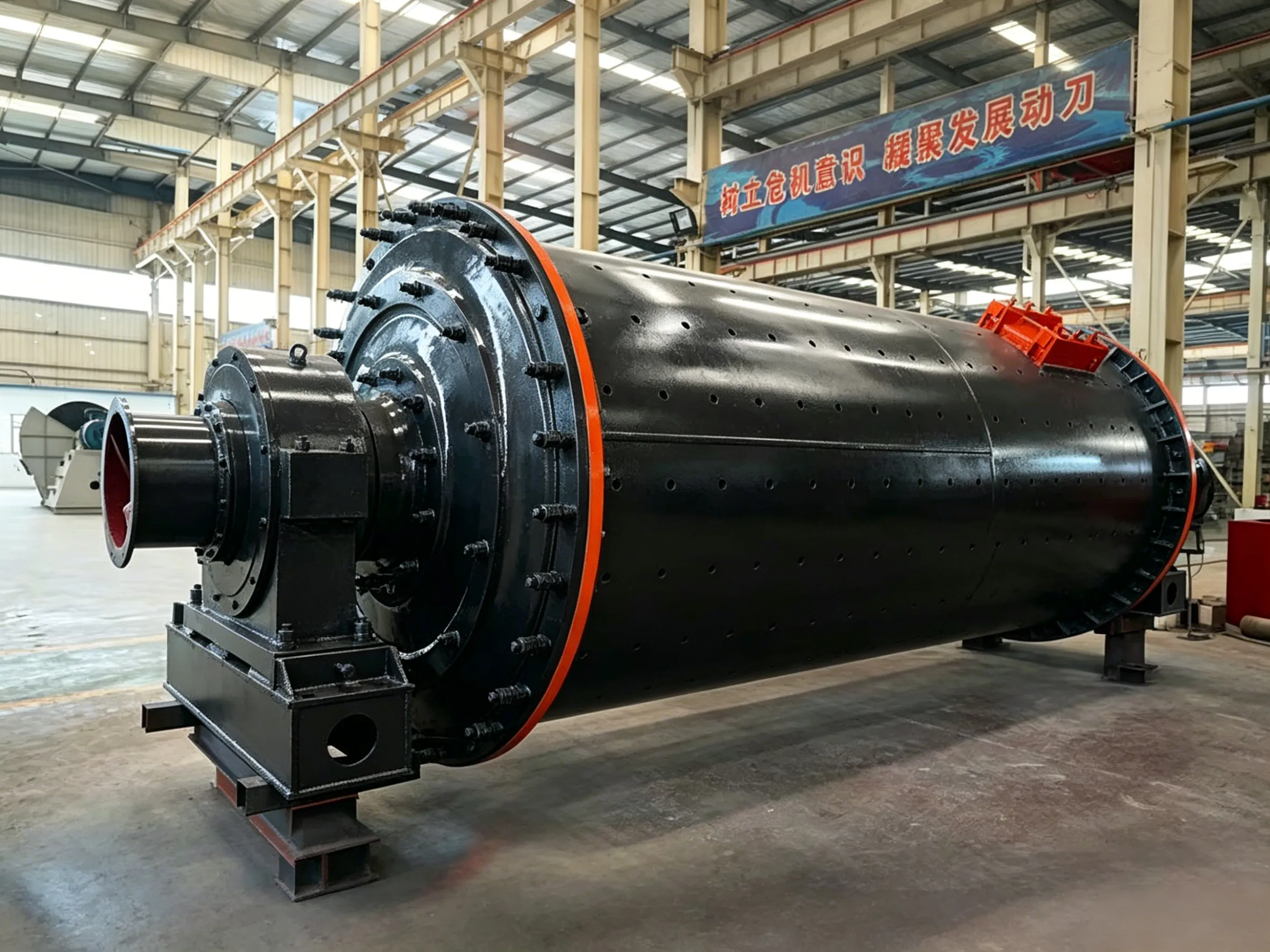
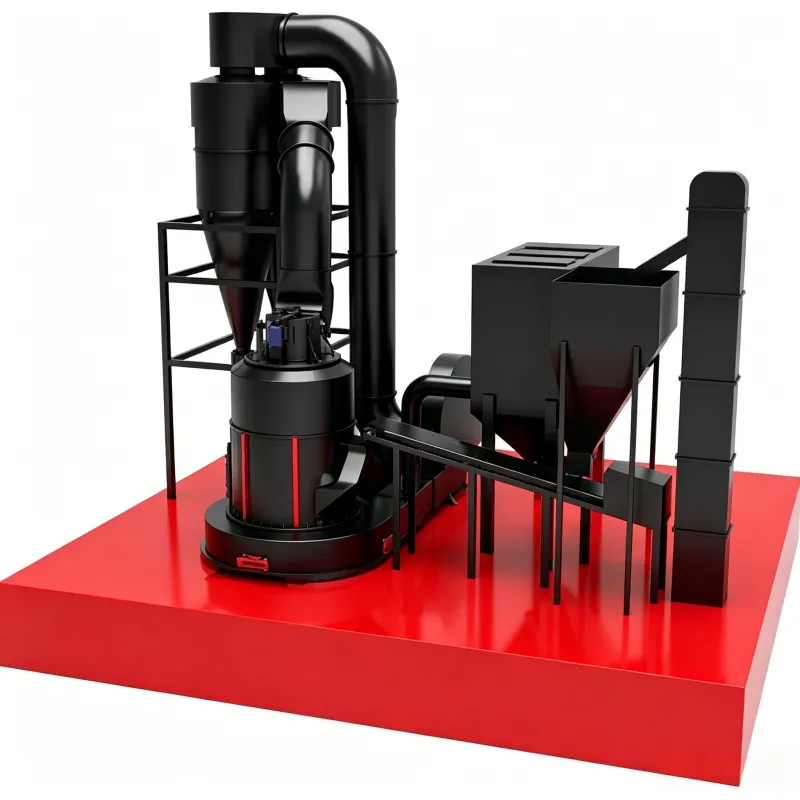
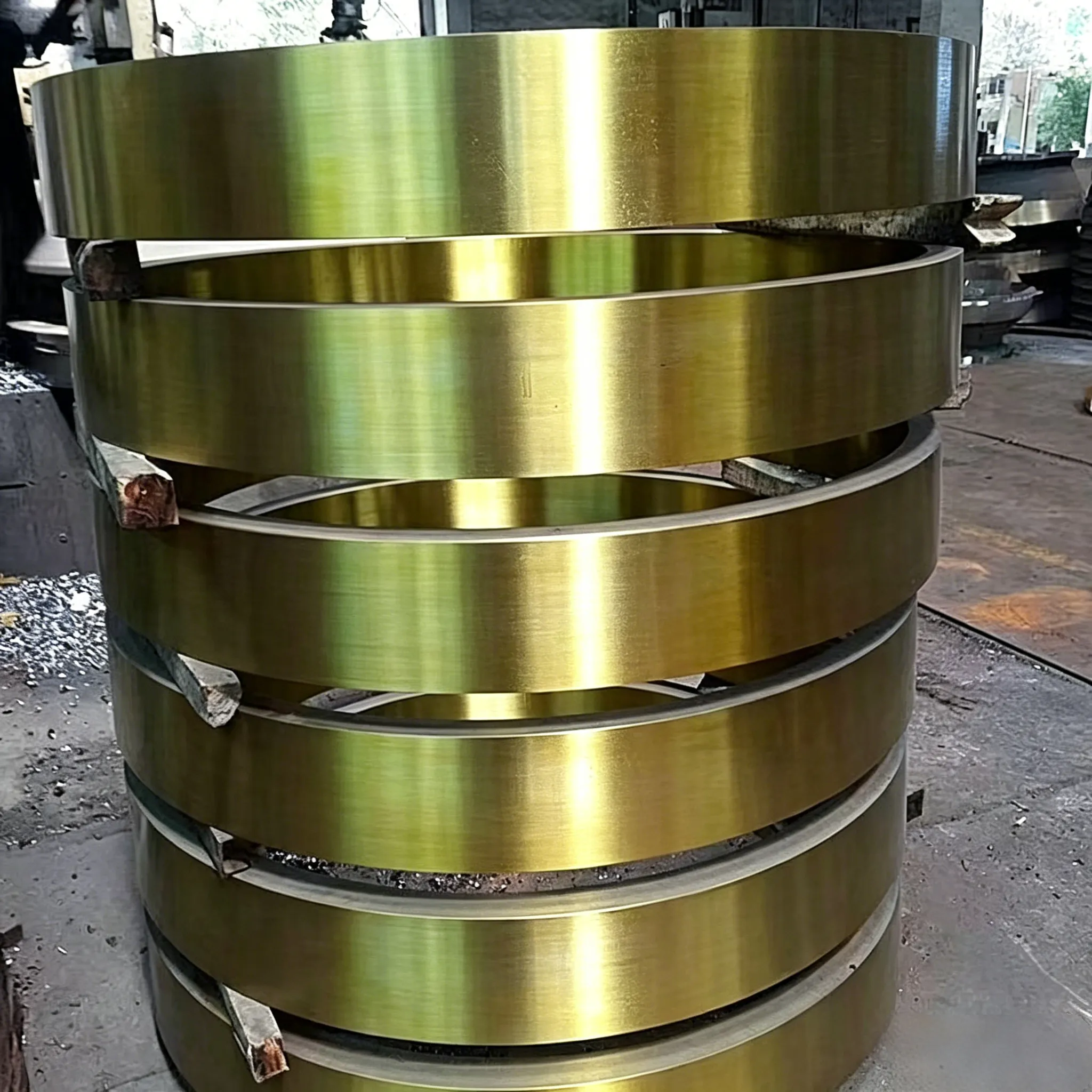
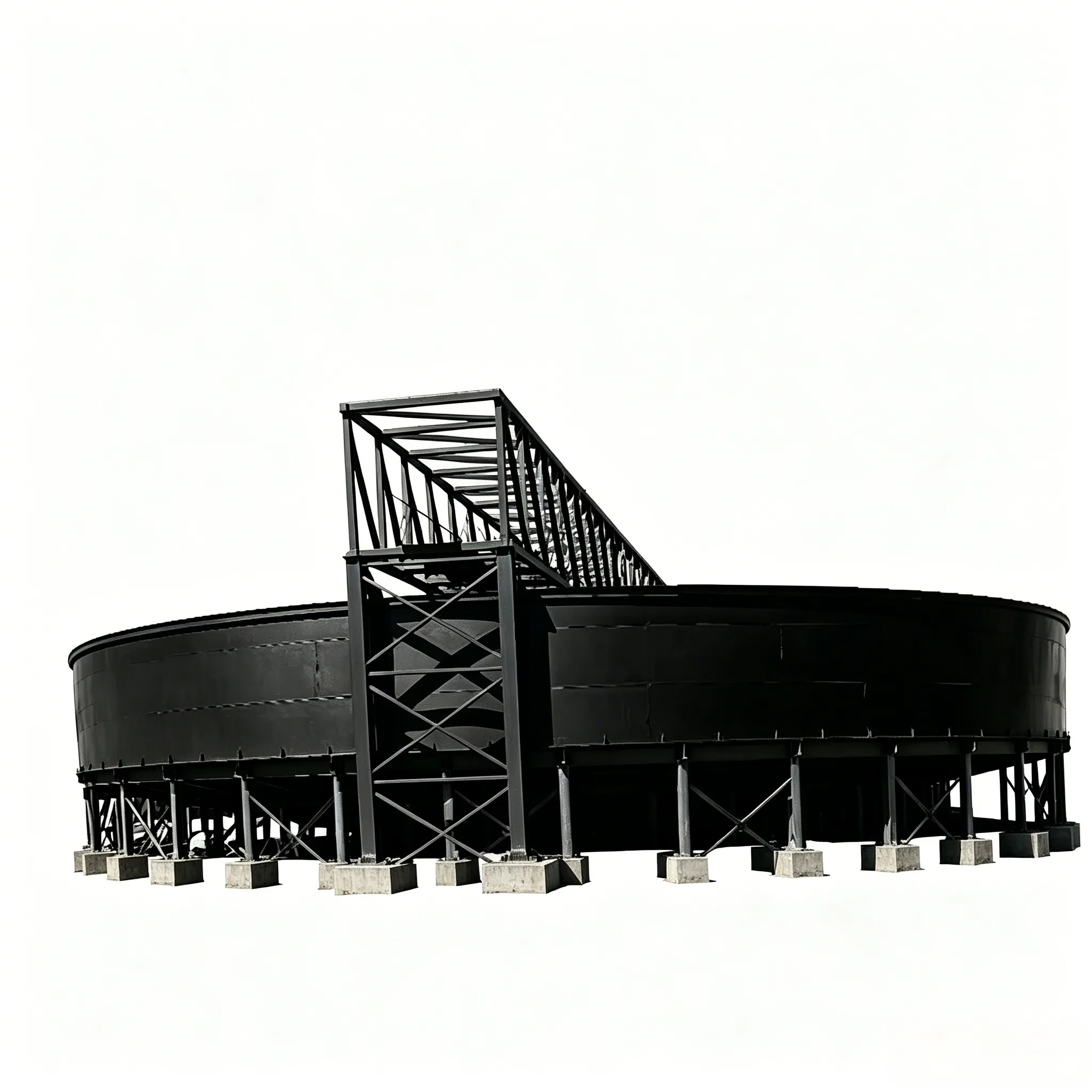
Choosing the correct ball mill size is essentially a scientific matching process between production targets (capacity and fineness) and key equipment parameters (diameter, length, and power). This requires a systematic approach combining theoretical calculations, practical calibration, and comprehensive evaluation.
Step 1: Understand the Critical Role of Dimensions
Ball mill specifications are usually expressed as drum diameter (D) × drum length (L), e.g., Φ1500×3000. These two dimensions determine performance:
Diameter (D) – primarily determines impact force and throughput. A larger diameter allows balls to drop from a greater height, generating stronger impact force to break harder ores, and the mill can process more material per unit time.
Length (L) – primarily determines grinding time and product fineness. A longer drum keeps the material inside for a longer residence time, resulting in finer grinding.
A general rule of thumb: to maximise throughput, increase diameter first; to achieve finer product, increase length first.
Step 2: Master the Core Calculation Method
The key to sizing is calculating the processing capacity (Q), i.e., tonnes per hour. The following empirical formula is commonly used for preliminary estimation:
Q = 0.2 × D² × L × n × φ × δ
Parameter definitions:
Q – processing capacity (tonnes/hour)
D – effective drum diameter (metres)
L – effective drum length (metres)
n – drum rotational speed (rpm), typically 65–85% of the critical speed
φ – grinding media filling rate (%), usually 20–35%
δ – material density correction factor: 0.8–1.0 for hard ores, 1.2–1.5 for soft materials
Calculation example:
For a Φ1500×3000 mill (D = 1.5 m, L = 3 m), with n = 25 rpm, φ = 30%, processing medium‑hard ore (δ = 1.0):
Important note: This is a theoretical maximum. Actual capacity must be corrected for ore hardness, target fineness, and other factors:
For hard ores, reduce Q by 10–20%.
Finer target grind sizes lower Q.
Wet grinding typically yields 15–30% higher throughput than dry grinding.
Step 3: Refer to Standard Specification Tables
Comparing your calculations with commercially available equipment parameters is a key validation step. Below is a reference table of common models and their specifications:
Model (D×L)
Drum Speed (rpm)
Ball Load (t)
Feed Size (mm)
Discharge Size (mm)
Capacity (t/h)
Motor Power (kW)
Φ900×1800
36–38
1.5
≤20
0.075–0.89
0.65–2
18.5
Φ900×3000
36
2.7
≤20
0.075–0.89
1.1–3.5
22
Φ1200×2400
36
3
≤25
0.075–0.6
1.5–4.8
30
Φ1200×3000
36
3.5
≤25
0.074–0.4
1.6–5
37
Φ1500×3000
29.7
7.5
≤25
0.074–0.4
2–5
75
Φ1500×4500
27
11
≤25
0.074–0.4
3–6
110
Φ1830×3000
27
13
≤25
0.074–0.4
4–10
130
Step 4: Follow a Systematic Sizing Workflow
Define your core requirements – target throughput (t/h), feed size, and product fineness (e.g., % passing 200 mesh).
Preliminary equipment selection – use the empirical formula (Step 2) to estimate the required effective volume and power. The key is to match the total installed power with the energy required to grind the ore.
Benchmark against industry data – look for operating data from existing plants processing similar ores. Use their actual specific throughput (q value, i.e., capacity per unit volume) as a reference. The q value can be calculated from known plant data: q = Q₀ × (β₁ – β₂) / V where Q₀ is throughput, β₁ and β₂ are feed and discharge fineness (% passing a given screen), and V is effective volume.
Conduct laboratory tests – this is the most critical step. Run small‑scale ball mill tests to determine the optimal media charge, speed, and filling rate, providing direct evidence for your final choice.
Comprehensive evaluation and decision:
Energy efficiency and cost – compare specific power consumption (kWh/t) of different options. Look for energy‑saving features such as variable‑frequency drives and rolling bearings.
Length‑to‑diameter ratio (L/D) – select according to the process: for open‑circuit grinding, choose L/D = 3.5–6; for closed‑circuit, 2.5–3.5; for wet grinding, usually 1.0–1.5.
Auxiliaries and expansion – ensure that classification, dust collection, and water circulation systems are complete. Leave at least 15% power margin for future capacity increases.
Feasibility Plan Recommendations – Summary
Selecting the correct ball mill size is a closed‑loop process of theoretical calculation + practical calibration + comprehensive assessment.
Put testing first – always conduct an ore grindability test before making an investment. This is the fundamental safeguard against mis‑sizing.
Learn from proven cases – give priority to data from operating plants that treat similar ores. This is often more reliable than pure theoretical estimates.
Consider the whole life‑cycle cost – don’t just look at the purchase price. Evaluate energy consumption, maintenance costs (liner life and other wear parts), and reliability.
Seek expert support – involve process engineers from equipment manufacturers and/or mineral processing design institutes in your decision. They have access to professional sizing software and extensive databases.
Include performance guarantees in your contract – specify throughput, product fineness, energy consumption, and other key performance indicators, along with acceptance test procedures, in the purchase agreement.