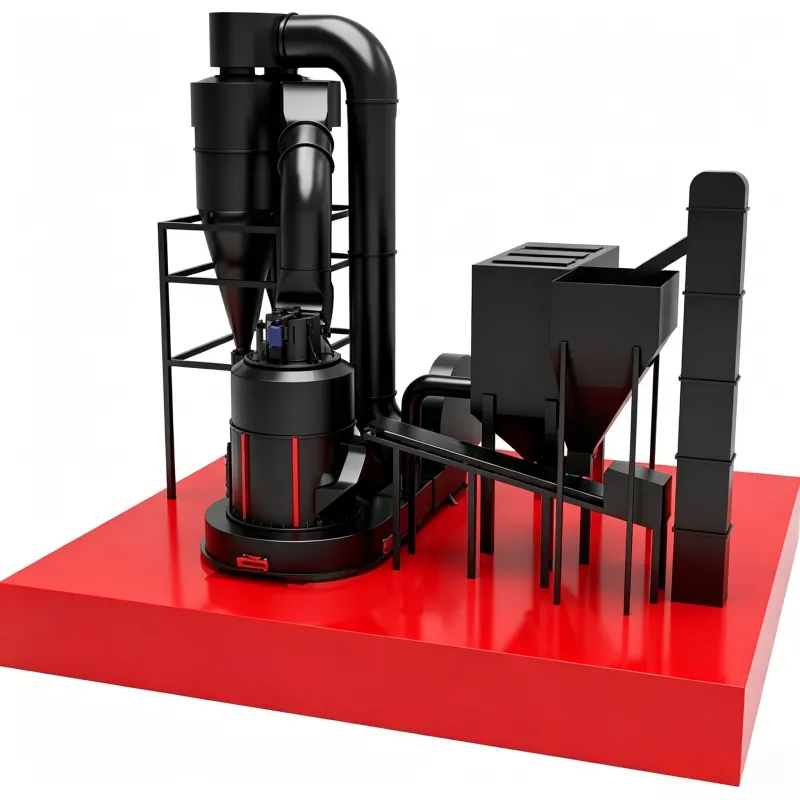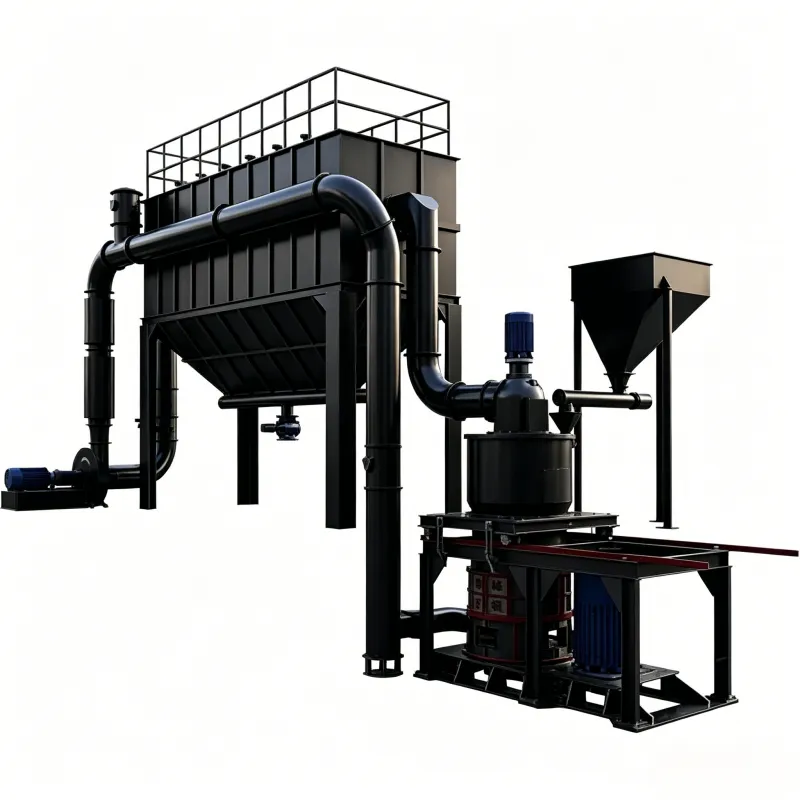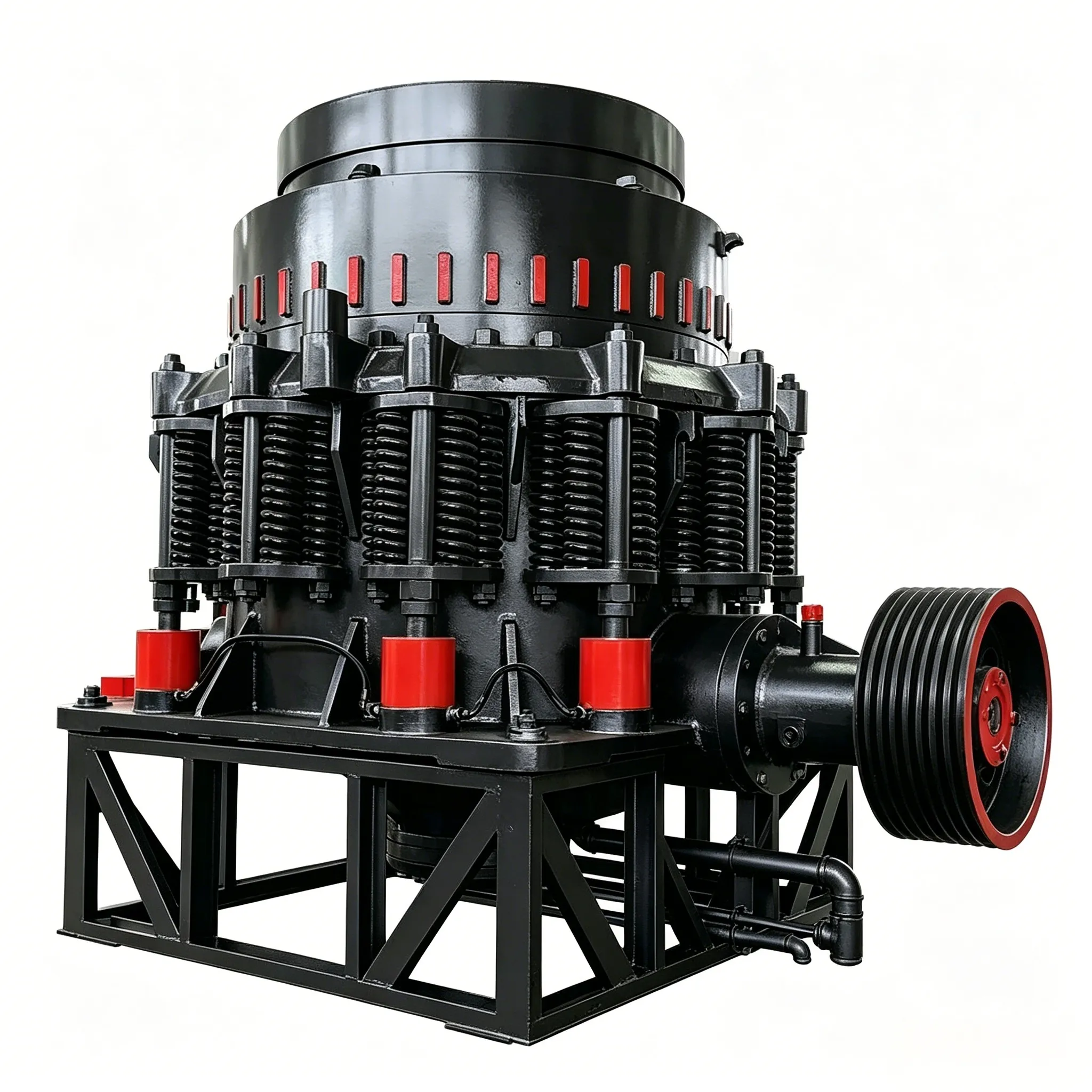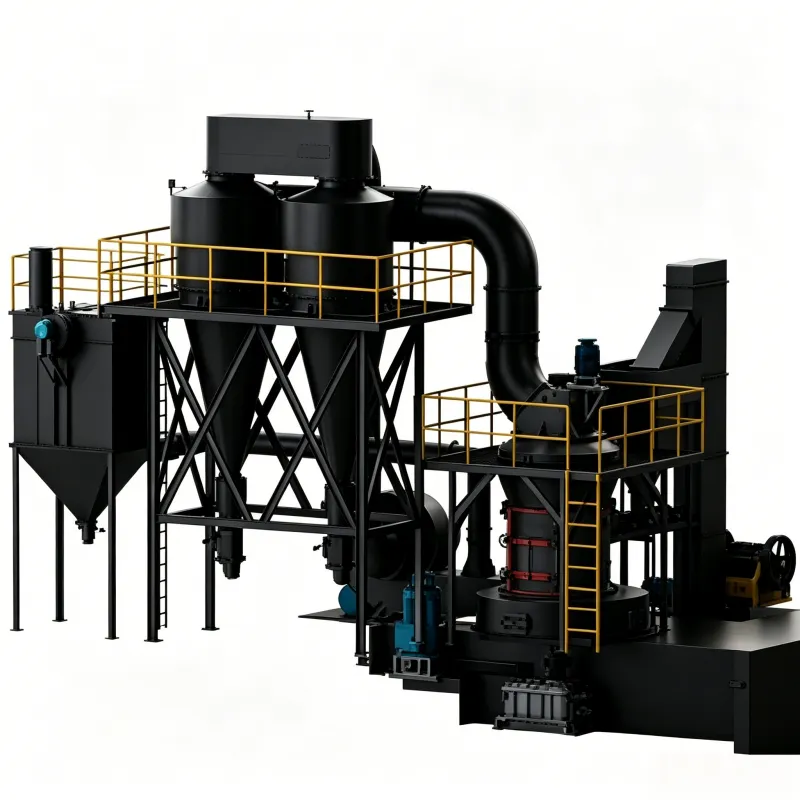
KX Raymond Mill
Introduction to Raymond Mill The Kx Raymond Mill is a core product…

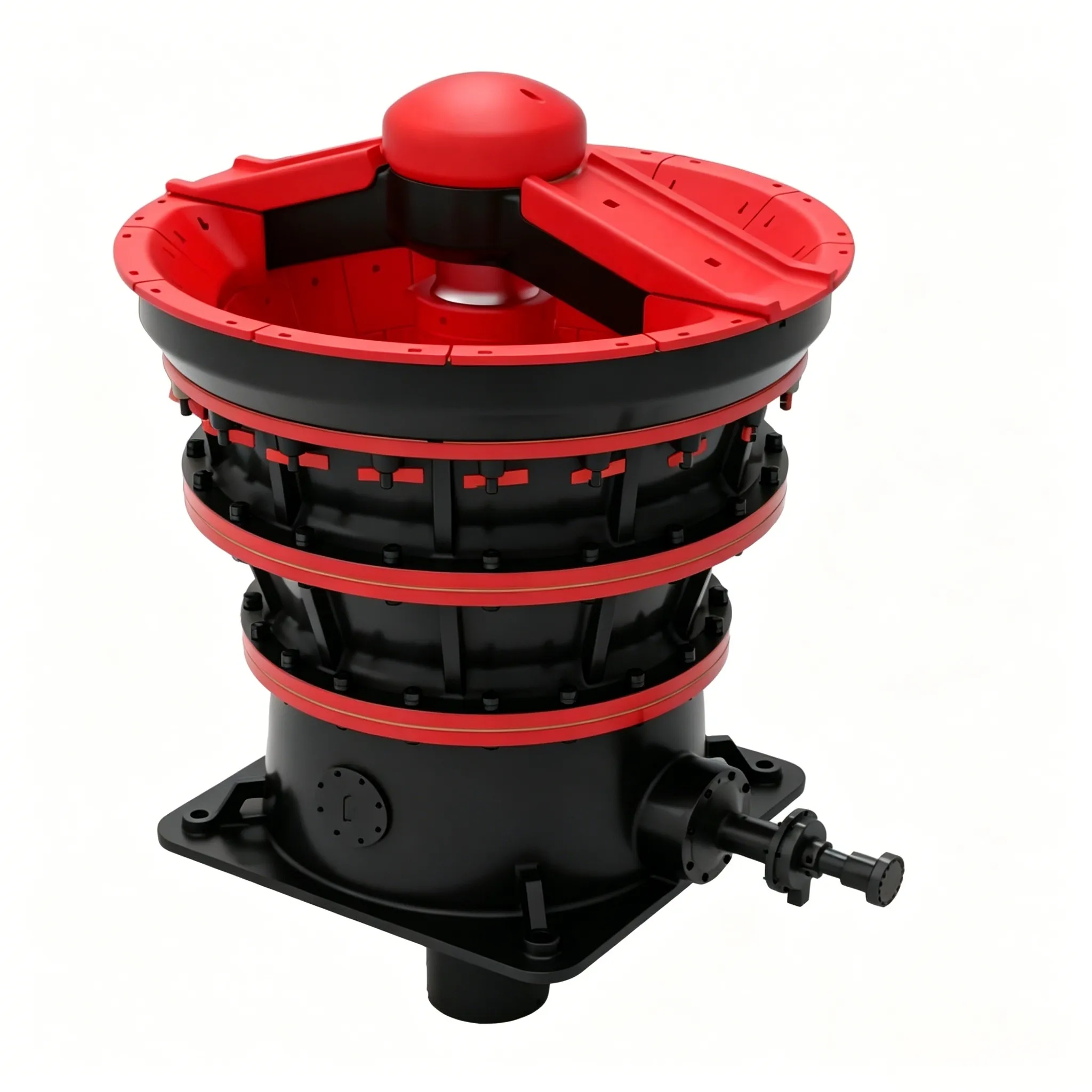
Under normal three-shift operation, the main contents and intervals of periodic maintenance for a gyratory crusher are as follows:
(1) Minor repair – Check and repair the wear and lubrication condition of the upper suspension device, dust seal, eccentric bushing, bevel gears, thrust plate, and drive shaft bushing of the crushing cone. Check and repair the lubrication system and replace the lubricating oil. Check and repair the wear and fastening condition of various liners.
Minor repair interval: approximately half a month.
(2) Medium repair – The interval for medium repair mainly depends on the wear of the cone liner and frame liner, as well as the wear of the drive shaft bushing.
Contents of medium repair: replace the crushing cone liner; repair or replace the drive shaft, drive shaft bushing, bevel gears, and worn parts of the suspension device; repair or replace the eccentric sleeve, inner and outer bushings, and thrust plate; repair and replace electrical equipment.
A medium repair includes all items of a minor repair.
Interval: generally once every six months.
(3) Major repair – Mainly involves repairing or replacing the frame, the middle frame body, the crossbeam, and repairing the foundation. A major repair includes full inspection and handling of all items in the medium repair, as well as technical improvements.
Major repair interval: generally once every five years.
The intervals for medium and major repairs are related to the hardness of the ore being crushed. For example, when crushing magnetite, a medium repair may be needed every 3–4 months, whereas when crushing limestone, the interval may extend to about two years. The intervals are also affected by the quality of daily maintenance and repair work. Therefore, strengthening routine maintenance, preventing failures, and improving repair quality are important ways to extend the service life of the machine.
Currently, most gyratory crushers are repaired using the component pre-assembly method.
The suspension device is subjected to heavy dynamic loads; therefore, it must be installed stably and firmly, without any swinging, and with good lubrication. During normal operation of the crusher, the fixed sleeve (6) must be tightly fitted without any looseness (see Fig. 3-14). Under normal conditions, the main shaft can rotate freely in either direction, but at a speed not exceeding 10 revolutions per minute. If it rotates too fast, it indicates a fault in this part.
When the conical sleeve (5) and the fixed sleeve (6) are severely worn, the stroke of the moving cone decreases, and the crusher’s output drops significantly. In such cases, timely repair or replacement is required. When ordering spare parts such as the conical sleeve, fixed sleeve, and support ring, their hardness and the hardness difference between them must be ensured according to the drawing requirements.
As this component is particularly important, in addition to regular scheduled inspections, it should also be inspected and repaired during production breaks whenever possible.
The screw (2) on the nut (3) is used to separate the nut (3) from the outer sleeve (4). The screw below is used to remove the fixed sleeve (6). Therefore, after repair, these screws should be oiled and properly stored. The nut (3) should be securely fixed to the main shaft with the key (1).
This component is lubricated with grease. After repair, it should be thoroughly lubricated with clean grease. Generally, the grease should be replaced about every half a month, and finally the cap should be put on.
When the liner thickness has worn down by two‑thirds, or when the liner is worn through or cracked, or when the discharge opening has become too large to be adjusted, the frame liner or the crushing cone liner needs to be replaced. When replacing liners, the extent of replacement may vary depending on the wear and cracking condition, generally as follows:
(5) Perform only partial replacement.
When replacing frame liners, if the old liners are firmly attached and cannot be removed, gas cutting may be used, and the inner surface of the frame should be cleaned thoroughly. The concrete cast on the back of the liners is mixed from 500–600 grade cement and sand in a weight ratio of 1:3. Before casting, the liners must be cleaned and polished to ensure that the concrete bonds firmly with them. After casting, the concrete must be trimmed so that the ribs on the back of the liners fit tightly against the frame. The concrete must be cured and dried before the crusher is put into operation.
Before replacing the crushing cone liner, first loosen the clamping nut 20 (Fig. 3-2) by about 15–20 mm, then start the crusher and operate it under load for a short period. During this time, feed the crusher evenly with an appropriate amount of ore, and assign a dedicated person to monitor the crusher’s condition. Once the bond between the crushing cone body and the liner is broken, the liner can be easily removed.
If the above method still fails to remove the crushing cone liner, gas cutting must be used. During cutting, care must be taken at all times not to damage the cone body.
After the old liner has been removed, clean and polish the crushing cone body, then install the new liners one by one from the bottom upward.
After the lower liner is installed, use the adjusting ring at the lower part of the cone body to maintain a gap of 1–2 mm between the lower liner and the cone body (as shown in Fig. 3-15). After the topmost liner is installed, first fit the clamping nut to check the clamping condition, and then cast the zinc alloy. Before casting, preheat the cone body and the liners to 60–80°C. The gaps at the liner joints should be sealed with asbestos and clay to prevent leakage of the zinc alloy. For small crushers, the casting can be completed in one pour. For large crushers, two pours may be required.
After the zinc alloy has been cast, install the clamping nut 20 and the locking plate 19, etc. (see Fig. 3-2) to firmly secure the liners. Even if the nut is tightened securely, the liners may still loosen after the crusher has been in operation for some time. Therefore, the nut should be retightened again.
The threads on the main shaft and on the clamping nut are very important. During maintenance, they must be properly protected from damage and dust, cleaned thoroughly, and coated with dry grease to prevent rust.
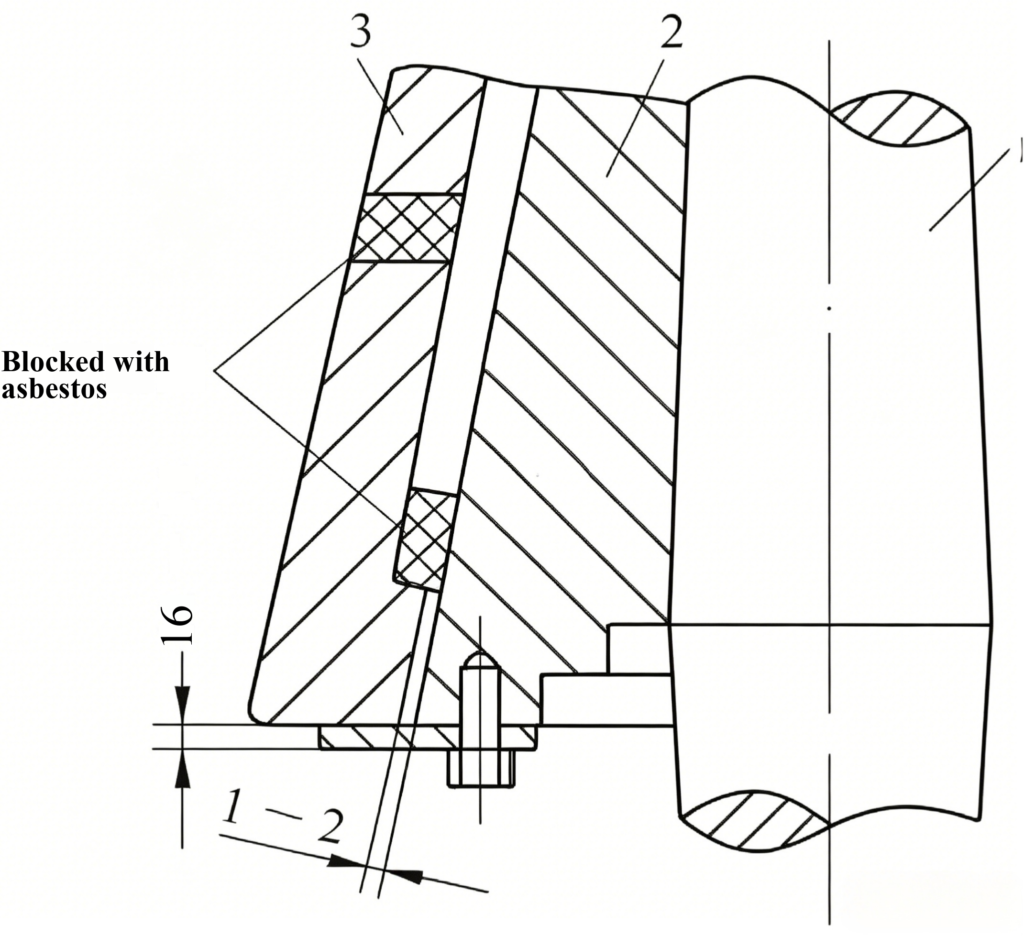
Fig. 3-15 Installation of the crushing cone liner
1—Main shaft
2—Cone body
3—Lower liner of the cone body
Disassembly and installation of the eccentric bushing
When the eccentric bushing has severe cracks, or when the clearance between the main shaft and the inner bore of the eccentric bushing is 1.5 to 2 times larger than the standard assembly clearance, repair or replacement is required. When the tooth thickness of the large and small bevel gears is worn by 25%–30%, the gears need to be replaced.
During maintenance, first drain the oil, then lift the eccentric bushing out from the top (after the crossbeam and the moving cone have been removed). After removal, inspect the Babbitt metal on the eccentric bushing and check the tightness between the steel bushing and the frame. For inspection, tap with a copper or aluminum hammer and judge the condition by the sound.
During installation, all contact surfaces must be smooth and thoroughly cleaned. Burrs and scratches on the Babbitt metal bushing must be repaired and eliminated. Oil grooves must be cleaned thoroughly and, if necessary, ground and deepened. Finally, the bottom cover must be tightly sealed to prevent oil leakage.
After the eccentric bushing is installed, the outer end faces of the two gears must be flush with each other (see Fig. 3-12). The gear backlash must meet the requirements stated in the previous installation section.
The gear backlash should be measured both before disassembly and after installation. The clearance record before disassembly helps understand the gear wear pattern and determine its service life. If the backlash is too large or too small, it can be adjusted by increasing or decreasing the number of adjusting shims at the bushing, or by adding or removing shims between the drive housing flange and the frame to move the drive shaft axially (refer to Fig. 3-10).