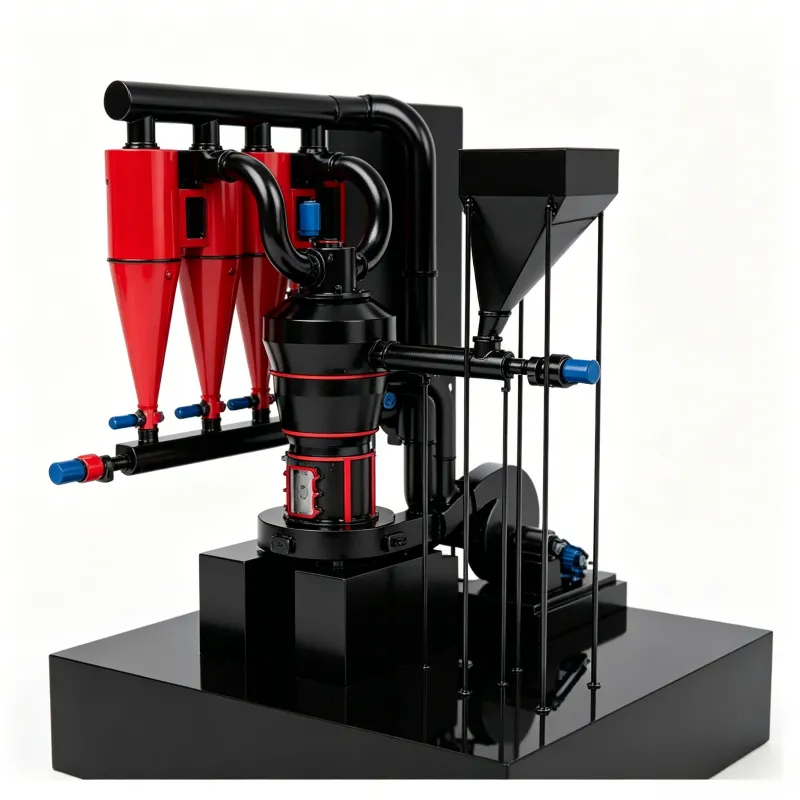
Hydrated Lime Mill
Introduction to the Hydrated Lime Mill (Calcium Hydroxide Mill) The KX Hydrated…

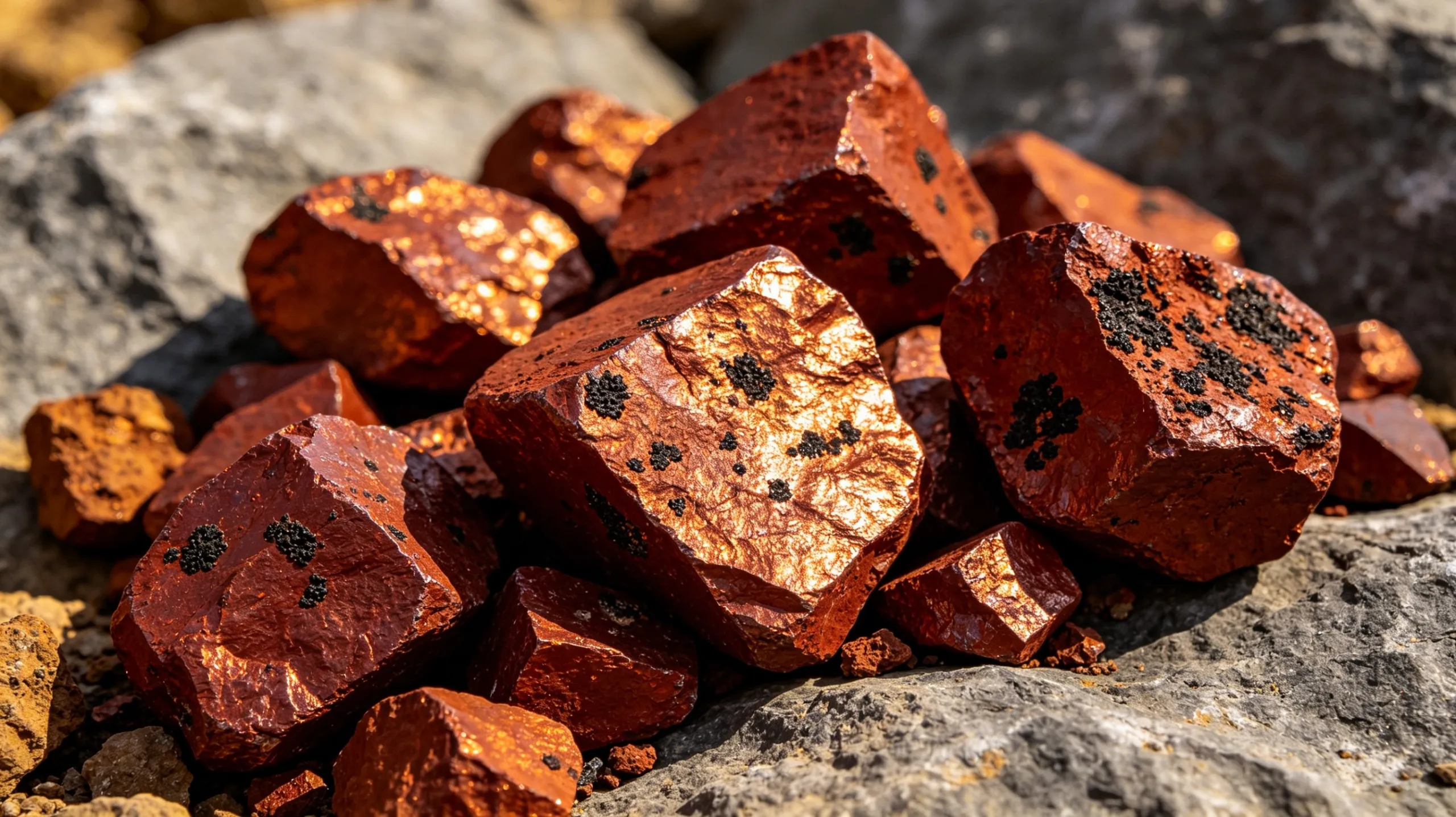
Iron ore products refer to the general term for iron-containing raw materials used in iron and steel smelting, including steelmaking lump ore, blast furnace ironmaking lump ore, sintering lump ore powder, iron concentrate, blast furnace pellets, and direct reduction pellets. China’s iron ore product standards are shown in the table . Tables 4-4 to 4-8.
Table 4-4 Iron Ore Standards for Steelmaking (Draft) Unit: %
| Taste class | change study become point | ||||||
| Fe≥ | SiO₂ ≤ | S≤ | P≤ | Cu≤ | Sn≤ | As≤ | |
| Premium grade | 68 | 4 | 0.1 | 0.1 | 0.2 | 0.1 | 0.1 |
| Grade A | 64 | 8 | 0.1 | 0.1 | |||
| Grade II | 60 | 11 | 0.1 | 0.1 | |||
| Grade III | 57 | 12 | 0.15 | 0.15 | |||
| Grade IV | 55 | 13 | 0.2 | 0.2 | |||
| 50 | 10 | 0.2 | 0.2 | ||||
| Particle size requirements | Particle size range: 10–250 mm ; maximum particle size: not exceeding 300 mm .The ore size for open-hearth steelmaking is 50–250 mm ; for electric arc furnace steelmaking, it is 50–100 mm ; and for converter steelmaking, it is 10–50 mm. For these particle sizes, both the upper and lower limits must not exceed 10%. | ||||||
Q&A on Metal and Non-metal Mineral Processing Technology
Table 4-5 Standards for Iron Ore Used in Blast Furnace Ironmaking (Draft)
| Taste class | Grade A | Grade II | Grade III | Grade IV | ||
| Chemical composition/% | Particle size TFe ≥ ( mm ) | 58 | 55 | 50 | 45 | |
| SiO₂ ≤ | 12 | 14 | 17 | 18 | ||
| S | Class I, ≤ | 0.1 | 0.1 | 0.1 | 0.1 | |
| Class II, ≤ | 0.3 | 0.3 | 0.3 | 0.3 | ||
| Class III, ≤ | 0.5 | 0.5 | 0.5 | 0.5 | ||
| P | Class I, ≤ | 0.2 | 0.2 | 0.2 | 0.2 | |
| Class II, ≤ | 0.5 | 0.5 | 0.5 | 0.5 | ||
| Class III, ≤ | 0.9 | 0.9 | 0.9 | 0.9 | ||
| Cu≤ | 0.2 | 0.2 | 0.2 | 0.2 | ||
| Pb≤ | 0.1 | 0.1 | 0.1 | 0.1 | ||
| Zn≤ | 0.1 | 0.1 | 0.1 | 0.1 | ||
| Sn≤ | 0.08 | 0.08 | 0.08 | 0.08 | ||
| As≤ | 0.07 | 0.07 | 0.07 | 0.07 | ||
| K₂O + Na₂O ≤ | 0.2~0.5 | 0.2~0.5 | 0.2~0.5 | |||
| Require | Particle size of block A is 10-40mm; particles larger than 40mm shall not exceed 10%, and particles smaller than 10mm shall not exceed 10%. Particle size B is 8-30mm; particles >30mm shall not exceed 10%, and particles <8mm shall not exceed 10%. | |||||
Table 4-6 Standard for Iron Ore Powder for Sintering (Draft)
| level | Grade A | Grade II | Grade III | Grade IV | |
| Chemical composition/% | TFe≥ | 54 | 50 | 48 | 45 |
| SiO₂ ≤ | 12 | 15 | 18 | twenty two | |
| S≤ | 0.2 | 0.3 | 0.4 | 0.5 | |
| P≤ | 0.1 | 0.15 | 0.2 | 0.3 | |
| Cu< | 0.2 | ||||
| Pb< | 0.1 | ||||
| Zn< | 0.1 | ||||
| Sn< | 0.08 | ||||
| As< | 0.07 | ||||
| Require | Magnetite and hematite particle sizes should be 0–10 mm; particles larger than 10 mm should not exceed 10%. High-sulfur ore particle size: 0–8 mm; >8 mm particle size: not exceeding 5%.The particle size of limonite should be 0–10 mm, and particles larger than 10 mm should not exceed 5%. | ||||
Table 4-7 Iron Concentrate Standards (Draft)
| Iron concentrate types | magnetite concentrate | Hematite concentrate | Panzhihua vanadium-titanium magnetite concentrate | Headband style Metal concentrate | ||||||||
| code name | C67 | C65 | C63 | C60 | H65 | H62 | H59 | H55 | P51 | B57 | ||
| TF≥ | 67 | 65 | 63 | 60 | 65 | 62 | 59 | 55 | 51 | 57 | ||
| Chemical composition/% | TFe allows wave range of motion | I | +1.0 0.5 | +1.0 —0.5 | ||||||||
| II | +1.5 1.0 | +1.5 -1.0 | ||||||||||
| SiO₂ ≤ | I | 3 | 4 | 5 | 7 | one | one | 12 | 12 | one | one | |
| II | 6 | 8 | 10 | 13 | 8 | 10 | 13 | 15 | ||||
| S≤ | I | 0.1~0.19 | 0.1~0.19 | <0.6 | <0.5 | |||||||
| II | 0.2~0.4 | 0.2~0.4 | ||||||||||
| P≤ | I | 0.05~0.09 | 0.08~0.19 | one | <0.3 | |||||||
| II | 0.1~0.3 | 0.2~0.4 | ||||||||||
 English English
  Spanish
 Russian
 Arabic
 Swahili
 French
 Turkish
 Portuguese
 Korean
 Japanese
 German
 Italian