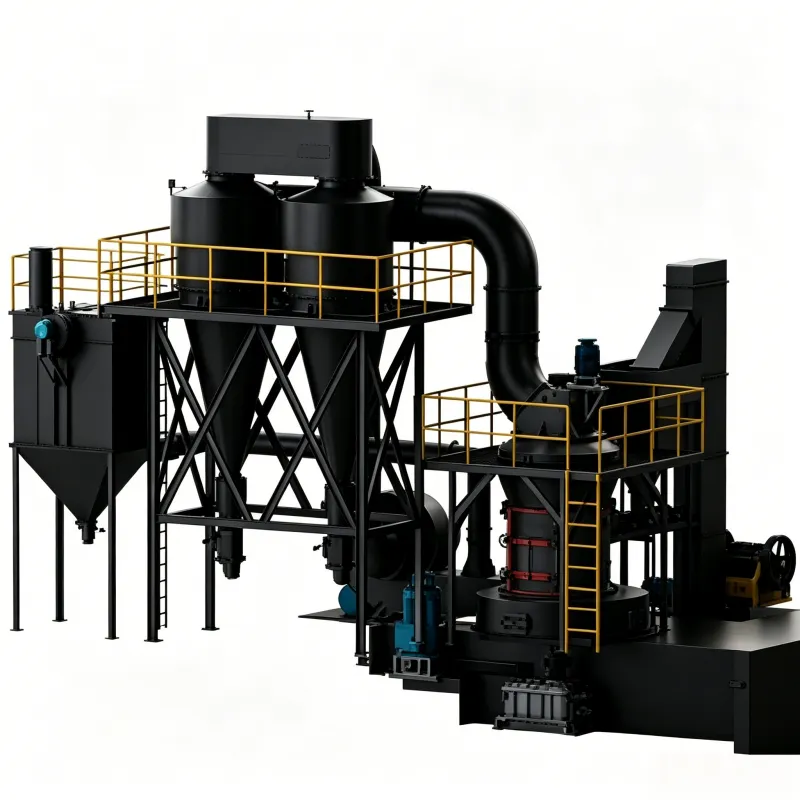
KX Raymond Mill
Introduction to Raymond Mill The Kx Raymond Mill is a core product…

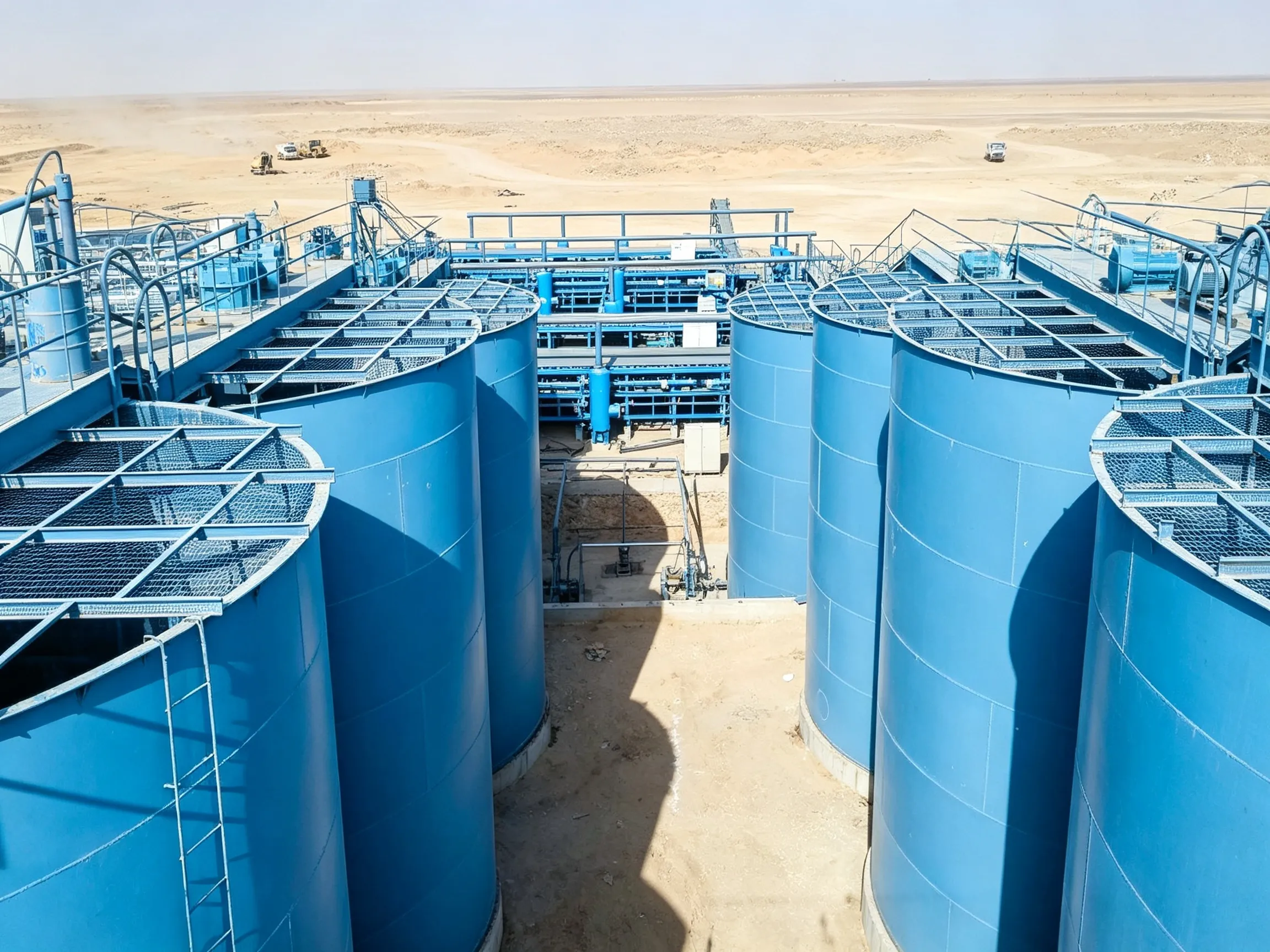
CIL (Carbon-in-Leach) is a gold extraction process that uses activated carbon to recover dissolved gold directly from cyanide leach slurry.
It is one of the most common methods for recovering gold from hard-rock gold ores.
The main difference between CIL and CIP (Carbon-in-Pulp) is:
The basic process is:
Gold Ore
   ↓
Crushing
   ↓
Grinding
   ↓
Thickening (optional)
   ↓
Cyanide Leaching + Activated Carbon
   ↓
Loaded Carbon
   ↓
Elution
   ↓
Electrowinning
   ↓
Gold Doré BarLarge gold-bearing rocks are reduced into fine particles.
Typical sizes:
Purpose:
To liberate gold particles from the host rock.
The ground ore slurry enters CIL tanks.
Chemicals added:
Gold dissolves according to:4Au+8CN−+O2+2H2O→4Au(CN)2−+4OH−
The gold becomes a soluble gold-cyanide complex.
Activated carbon is added directly into the leaching tanks.
The carbon adsorbs dissolved gold:
Gold in solution
        ↓
Activated carbon
        ↓
Gold-loaded carbon
Advantages:
Screens separate carbon from slurry.
The loaded carbon contains concentrated gold.
Typical carbon loading:
Gold is removed from carbon using:
The result is a gold-rich solution.
Gold is recovered as metal:
Gold solution
      ↓
Electrowinning
      ↓
Gold sludge
      ↓
Smelting
      ↓
Gold bar| Feature | CIL | CIP |
|---|---|---|
| Full name | Carbon-in-Leach | Carbon-in-Pulp |
| Leaching | Happens with carbon | Before carbon |
| Number of tanks | Usually fewer | Usually more |
| Residence time | Shorter | Longer |
| Gold recovery | Excellent | Excellent |
| Capital cost | Usually lower | Usually higher |
| Common use | Modern gold plants | Older plants |
A complete CIL gold plant includes:
The cost depends mainly on capacity and ore characteristics.
| Capacity | Estimated CIL Plant Cost |
|---|---|
| 1 TPH small CIL plant | $200,000 – $500,000 |
| 5 TPH CIL plant | $700,000 – $1.5 million |
| 10 TPH CIL plant | $1.5 – $3 million |
| 50 TPH CIL plant | $5 – $10 million |
| 100 TPH large CIL plant | $10 – $20+ million |
For a 5 TPH hard-rock gold CIL plant, a realistic budget is usually:
| Section | Estimated Cost |
|---|---|
| Crushing equipment | $100,000 – $200,000 |
| Grinding circuit | $200,000 – $400,000 |
| CIL tanks & agitators | $200,000 – $400,000 |
| Carbon screens & pumps | $50,000 – $100,000 |
| Elution & electrowinning | $100,000 – $250,000 |
| Electrical, piping, installation | $150,000 – $300,000 |
| Total | ≈ $900,000 – $1.3M |
Typical gold CIL operating costs:
| Item | Cost |
|---|---|
| Power | $2–6/t ore |
| Grinding media | $1–4/t |
| Cyanide | $2–10/t |
| Lime & reagents | $1–3/t |
| Labor | $2–5/t |
| Maintenance | $2–5/t |
Typical total:
✅ High gold recovery (often 90–95%+)
✅ Suitable for low-grade gold ores
✅ Lower capital cost than many traditional processes
✅ Good for large-scale continuous operation
✅ Better recovery of fine gold
❌ Requires cyanide handling facilities
❌ Higher environmental requirements
❌ Not suitable for some refractory ores
❌ Requires careful control of pH, oxygen, and carbon activity
CIL is usually selected when:
A typical modern gold processing line is:
Jaw Crusher
      ↓
Cone Crusher
      ↓
Ball Mill
      ↓
Hydrocyclone
      ↓
CIL Tanks
      ↓
Carbon Elution
      ↓
Electrowinning
      ↓
Gold Bar
For a 5 TPH gold CIL plant, the practical investment range is about $0.9–1.3 million USD for a complete plant, depending on automation, location, and engineering requirements.

 English English
 Spanish
 Russian
 Arabic
 Swahili
 French
 Turkish
 Portuguese
 Korean
 Japanese
 German
 Italian