1. Definition of Cone Crusher
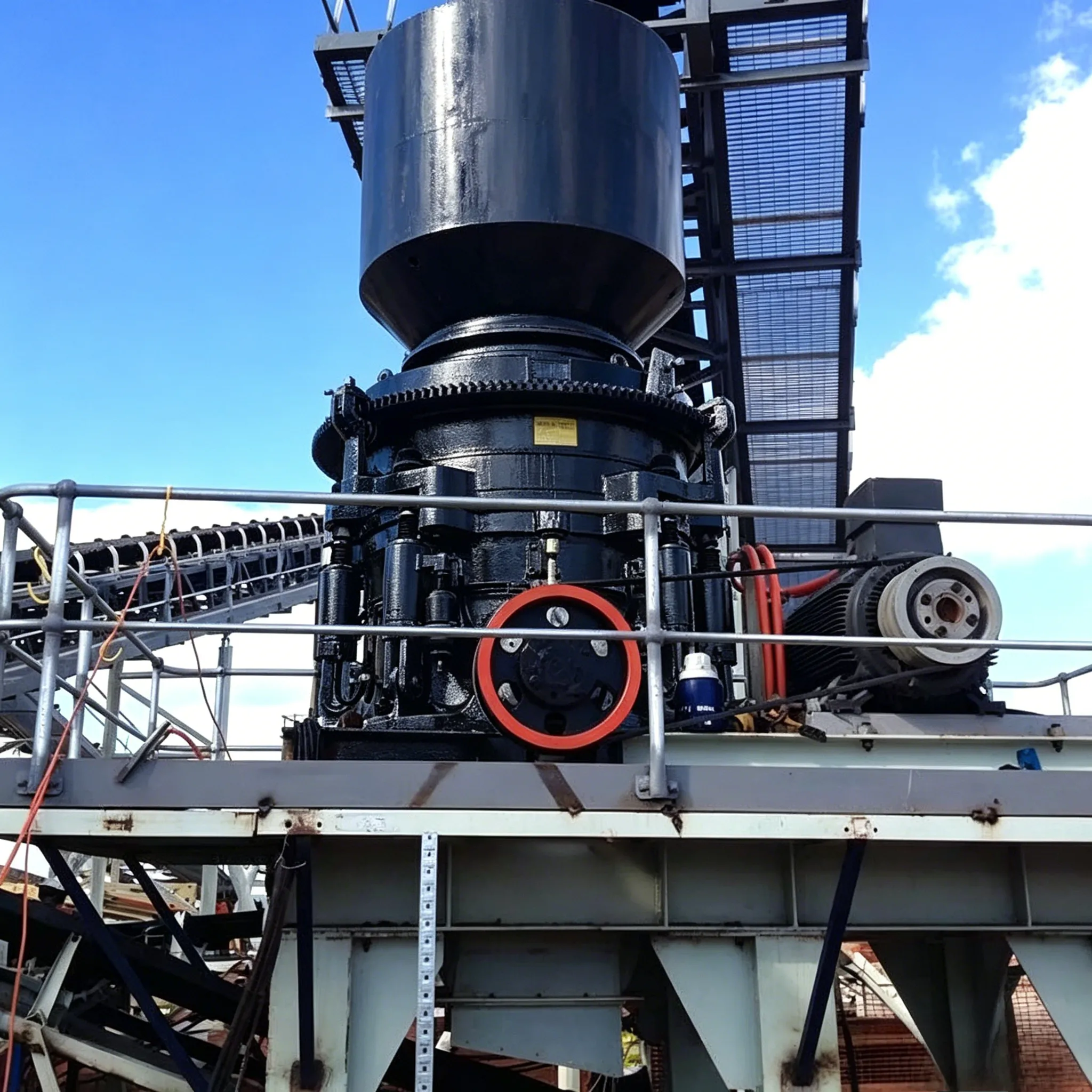
Cone crusher is a professional medium and fine crushing equipment specially designed for high-hardness ores. It is generally arranged after the jaw crusher as secondary or tertiary crushing equipment, widely used for crushing hard rocks such as granite, basalt, river pebble, iron ore and gold ore.
Driven by an eccentric main shaft, the movable cone performs gyratory swing to squeeze and crush materials. The finished aggregates feature regular cubic shape with few flaky particles, which can not only produce high-quality construction aggregates, but also provide qualified fine feed for ball mills and Raymond mills. According to structure and application, cone crushers are mainly divided into three types:
- Spring Cone Crusher: Traditional model adopting spring overload protection, commonly used in small and medium-sized sand and mineral processing production lines.
- Hydraulic Cone Crusher (Single Cylinder / Multi-cylinder): Current mainstream type with hydraulic cavity clearing, iron release function and automatic discharge setting. It features high automation and is suitable for continuous high-load operation in large mines.
- Gyratory Crusher: Super-large primary crushing cone equipment, which can replace jaw crushers for primary crushing in large open-pit mines with annual capacity of millions of tons.
1.1 Applicable Materials
Medium-hard and extremely hard brittle ores with Mohs hardness ≤ 12, including granite, basalt, river pebble, iron ore, copper ore, gold ore, quartz stone, etc.
Adopting laminated crushing principle, its wear parts have much lower consumption than impact crushers when processing hard rocks, making it the preferred secondary crushing equipment for hard rock production lines.
1.2 Main Application Scenarios
- High-hardness aggregate plants: Jaw crusher for primary crushing + cone crusher for medium & fine crushing to produce premium aggregates for expressways, bridges and commercial concrete.
- Mineral processing plants: Crush bulk ores into fine particles of 10–25 mm for subsequent grinding in ball mills.
- Resource recycling of mine tailings, steel slag and medium-hard construction waste.
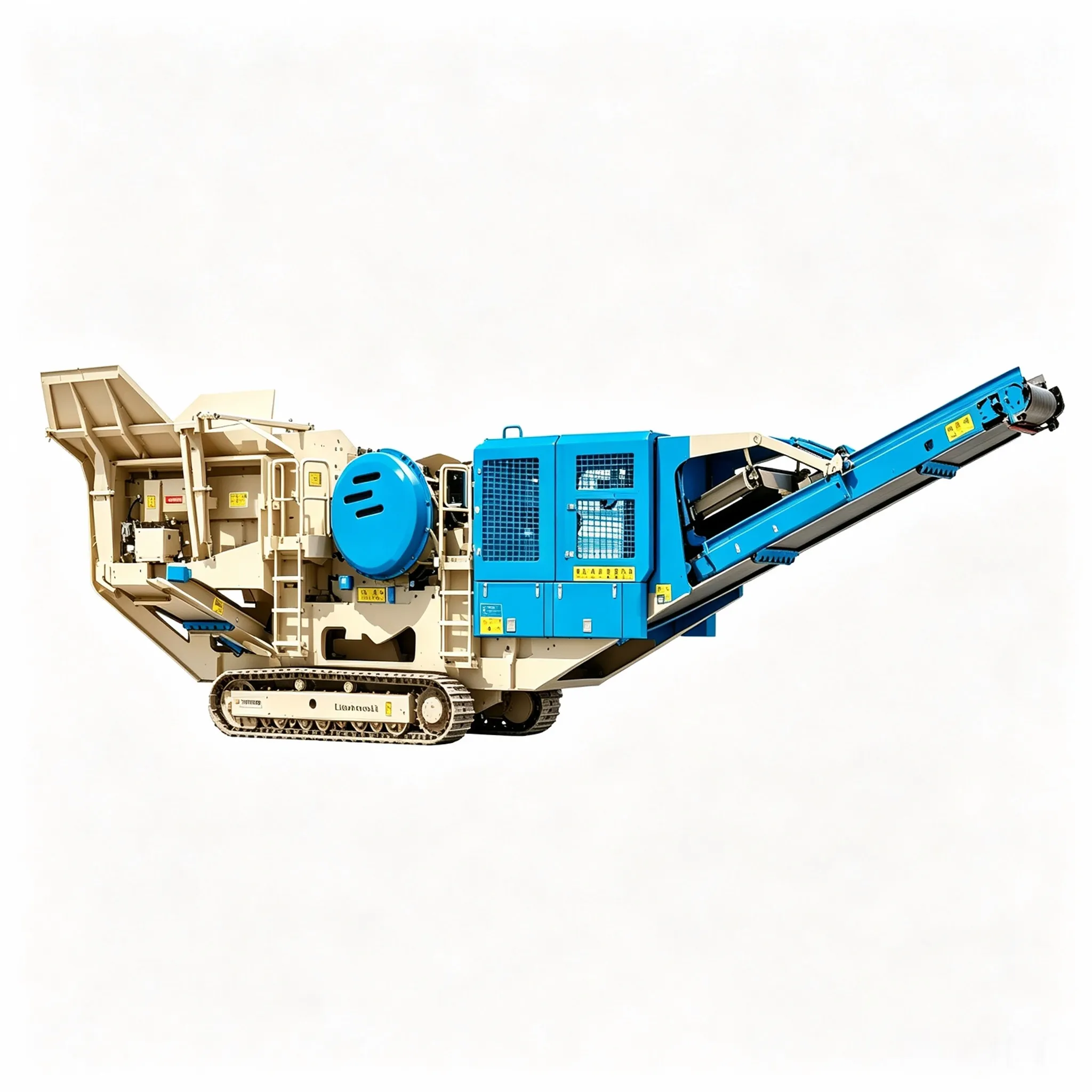
- Mobile cone crushing stations for on-site processing of hard stones in field projects.
2. Main Core Structure of Cone Crusher
- Fixed Cone (Adjustment Sleeve): Outer frame fitted with concave wear liners on the inner surface.
- Movable Cone (Crushing Cone): Core rotating component equipped with mantle liner on the outer surface.
- Eccentric Main Shaft Assembly: Power core that drives the movable cone to perform eccentric gyratory motion.
- Hydraulic / Spring Safety Device: Automatically lifts to discharge unbreakable foreign objects such as iron blocks to protect the whole machine from overload damage.
- Bevel Gear Transmission, Motor & Lubrication Station: Provide rotary power and continuous lubrication for eccentric components.
- Hydraulic Cavity Clearing Cylinder & Discharge Opening Adjusting Device: Remotely control finished particle size and realize one-button cavity clearing when material blocking occurs.
3. Detailed Working Principle (Laminated Gyratory Squeeze Crushing)
Cone crusher operates based on laminated crushing principle. The movable cone rotates eccentrically around the central axis, periodically tightening and loosening the crushing chamber to realize cyclic squeezing and fragmentation of ores. The whole process includes four stages:
Step 1: Material Feeding into Crushing Chamber
Ores pre-crushed by jaw crusher fall into the annular crushing chamber between fixed cone and movable cone from the top feed hopper, and sink downwards under gravity.
Step 2: Eccentric Drive for Movable Cone Gyration
The motor drives the eccentric sleeve via a pair of bevel gears. The eccentric sleeve further drives the main shaft and the movable crushing cone to perform eccentric gyratory movement: the movable cone revolves around the central axis while rotating slightly on its own axis.
Step 3: Periodic Chamber Opening & Closing for Laminated Crushing
- Crushing Stroke: When the movable cone swings close to the fixed cone, the gap of crushing chamber shrinks sharply. Internal ores are subjected to multi-layer squeezing, twisting and bending force. Stress cracks generate inside materials to break large ore lumps. Under inter-particle laminated compression, flaky stones are further crushed to obtain well-shaped cubic aggregates.
- Discharging Stroke: When the movable cone swings to the opposite side, the chamber gap expands instantly. Stones smaller than the discharge opening fall down and discharge by gravity. Oversized coarse particles remain in the upper chamber for next gyratory squeezing.
Step 4: Multi-stage Gradual Crushing from Top to Bottom
Ores pass through coarse crushing zone, medium crushing zone and fine crushing zone sequentially during downward movement. Particle size is reduced step by step, and qualified finished aggregates are continuously discharged from the annular bottom outlet.
Key 1: Hydraulic Overload Protection Principle
When unbreakable foreign objects such as steel bars and iron blocks jam the crushing chamber, the hydraulic system instantly releases pressure to lower the movable cone and widen the discharge opening for foreign matter evacuation. The hydraulic system resets automatically afterward to avoid damage to expensive core components like main shaft and bushing.
Spring cone crushers adopt spring compression yielding to realize overload protection.
Key 2: Discharge Size Adjustment
Adjust the vertical height of the fixed cone via hydraulic cylinder to change the bottom gap between movable cone and fixed cone:
- Raise the fixed cone → Smaller discharge opening → Finer finished aggregates
- Lower the fixed cone → Larger discharge opening → Coarser finished aggregates
4. Advantages & Disadvantages
4.1 Advantages
- Specially optimized for high-hardness ores; laminated crushing greatly reduces wear consumption and operation cost in hard rock working conditions compared with impact crushers.
- Large crushing ratio, high cubic aggregate yield with few flaky particles, meeting high-grade infrastructure aggregate standards without extra shaping equipment.
- Hydraulic models support automatic cavity clearing, iron release and intelligent gap adjustment, enabling 24-hour continuous full-load stable operation.
- Complete sealed lubrication and dust-proof system, low failure rate, suitable for long-term large-scale mine production.
4.2 Disadvantages
- Not applicable for wet, high-clay viscous materials, as sticky mud will stick to the crushing chamber and cause blockage.
- Precise and complex structure leads to higher equipment cost than impact crushers of the same specification; professional technicians are required for maintenance.
- Lower fine powder yield than impact crushers, so vibrating screens and sand making machines are usually matched to increase manufactured sand output.
5. Standard Production Line Configuration
- Hard Rock Aggregate Line: Vibrating Feeder + Jaw Crusher + Hydraulic Cone Crusher + Vibrating Screen
- Mineral Processing Crushing Line: Jaw Crusher + Cone Crusher + Belt Conveyor + Ball Mill


 English
 Spanish
 Russian
 Arabic
 Swahili
 French
 Turkish
 Portuguese
 Korean
 Japanese
 German
 Italian