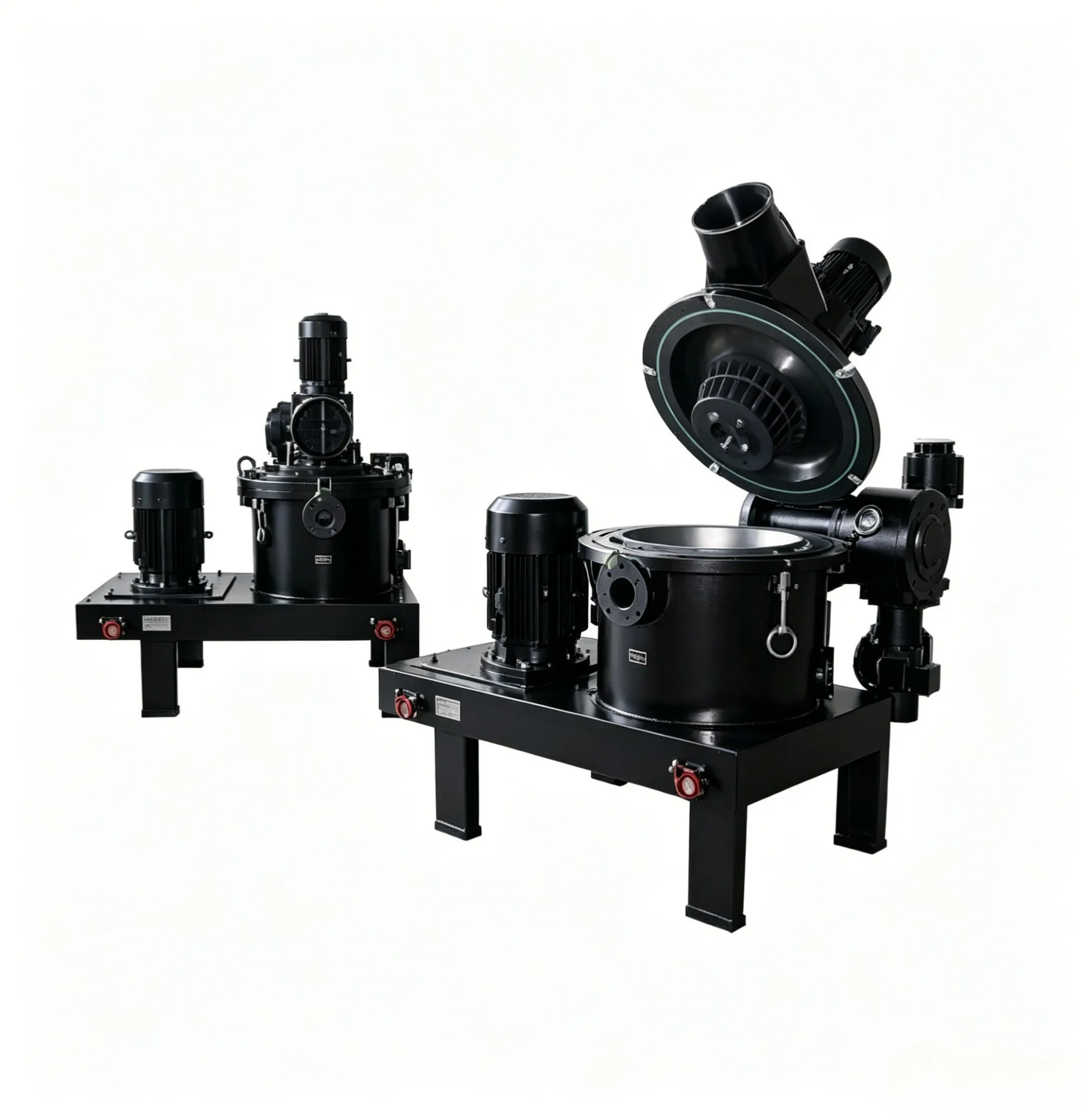
SAM Mechanical Crusher
SAM Mechanical Crusher SAM Mechanical Crusher Incorporating technology from Japan and Germany,…

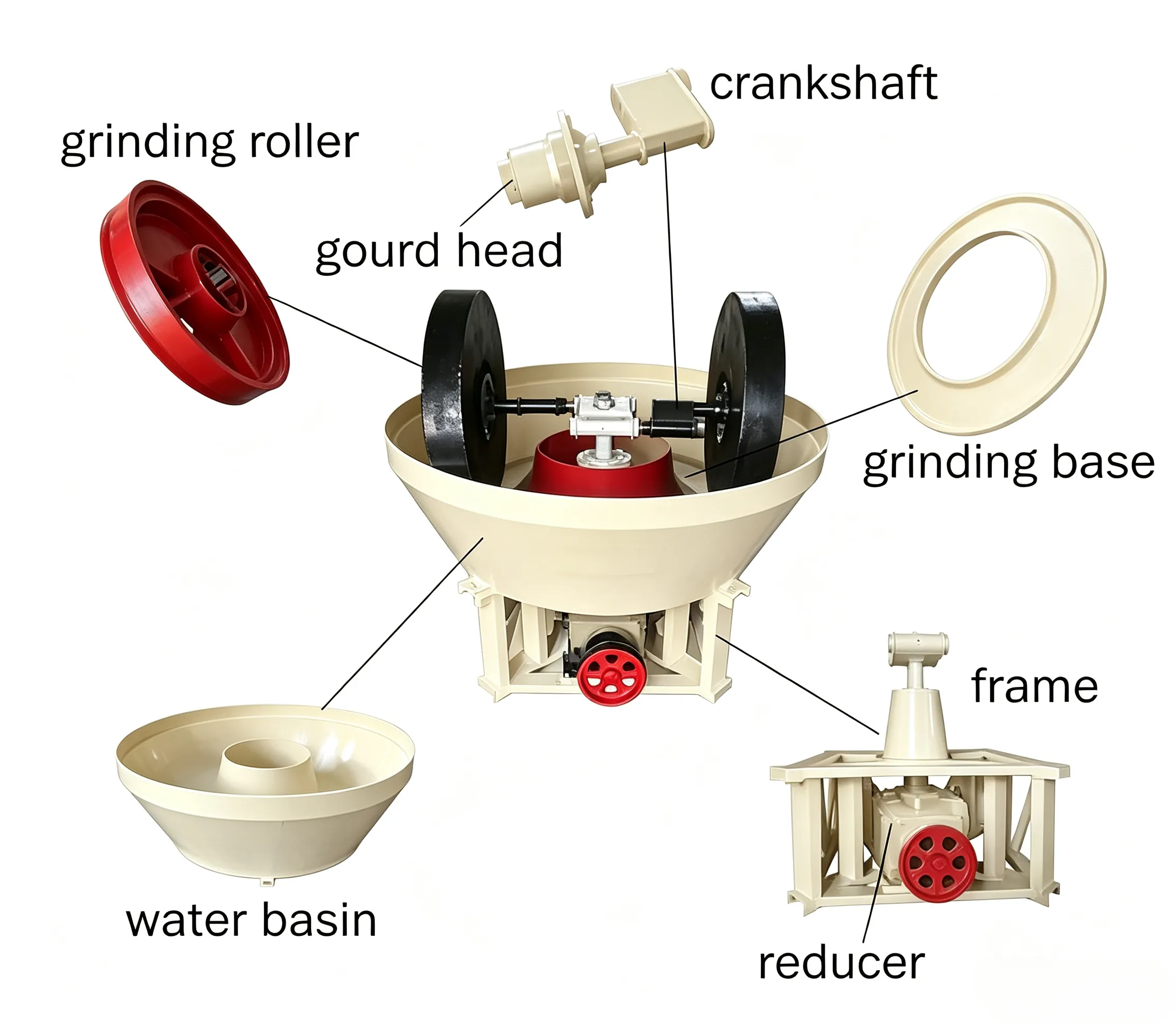
A wet pan mill is a type of grinding machine used mainly in mineral processing, especially for gold ore, copper ore, and other hard minerals. It is sometimes called a gold grinding mill, Chilean mill, or roller mill. It uses heavy grinding wheels that rotate and crush ore in the presence of water, producing a fine slurry.
Wet pan mills are widely used in small and medium-scale mining operations because they are relatively simple, robust, and effective for recovering fine gold particles.
A typical wet pan mill consists of:
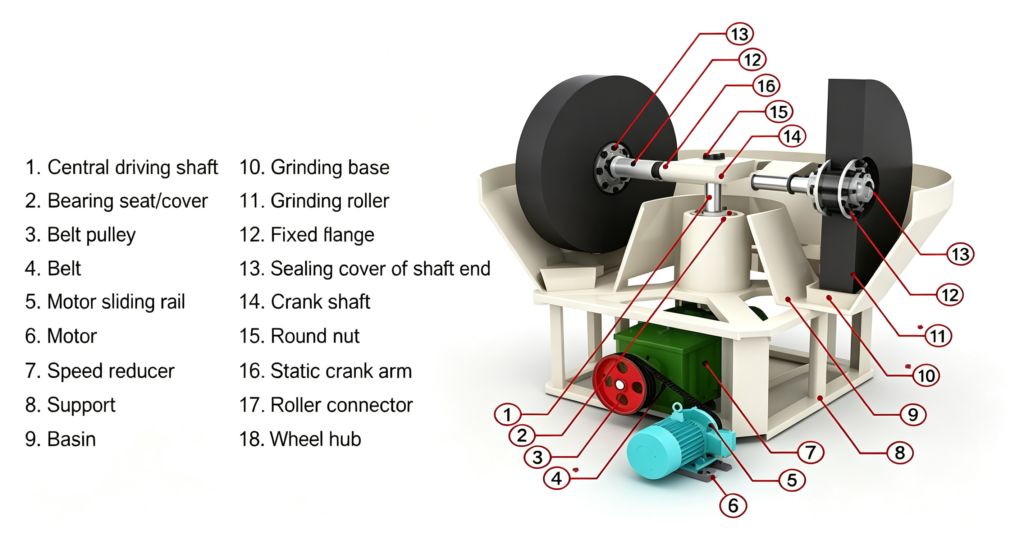
The grinding process occurs through crushing, grinding, and mixing.
Raw ore is fed into the pan together with water.
Typical feed:
The water turns the material into a slurry.
The motor rotates the rollers around the pan.
The rollers apply two main forces:
The weight of the rollers presses the ore against the pan surface.
Large rocks are broken into smaller pieces.
As the rollers rotate and slide, they grind the particles into fine powder.
The purpose of grinding is not only to make smaller particles but to liberate valuable minerals.
For example, in gold ore:
Before grinding:
Quartz rock
 ├── Gold particle trapped inside
 └── Gangue minerals
After grinding:
Fine slurry
 ├── Free gold particles
 ├── Fine quartz
 └── Other minerals
The released gold can then be recovered by methods such as:
After grinding, the fine slurry flows out through the discharge opening.
The slurry typically contains:
Water provides several benefits:
Wet particles are easier to grind than dry particles.
Dry grinding creates large amounts of mineral dust.
Fine particles remain suspended, allowing better recovery.
Water cools the grinding surfaces.
| Feature | Wet Pan Mill | Ball Mill |
|---|---|---|
| Grinding media | Large heavy rollers | Steel balls |
| Grinding method | Compression + shearing | Impact + abrasion |
| Feed size | Usually <30 mm | Usually <25 mm |
| Product size | 50–200 mesh typical | Can reach finer sizes |
| Energy consumption | Lower for small plants | Higher |
| Equipment cost | Lower | Higher |
| Maintenance | Simple | More complex |
| Common use | Small gold plants | Large mining plants |
✅ Low investment cost
✅ Simple operation
✅ Good for gold recovery plants
✅ Can handle sticky ores
✅ High grinding efficiency for coarse gold ores
✅ Easy maintenance
❌ Lower capacity than large ball mills
❌ Not ideal for very fine grinding (<10 microns)
❌ Heavy moving parts require strong foundations
❌ Wear of grinding plates and rollers can be significant
Wet pan mills are commonly used for:
A common small gold processing flowsheet is:
Jaw Crusher
      ↓
Wet Pan Mill
      ↓
Gravity Concentrator
      ↓
Gold Recovery
 English English
 Spanish
 Russian
 Arabic
 Swahili
 French
 Turkish
 Portuguese
 Korean
 Japanese
 German
 Italian