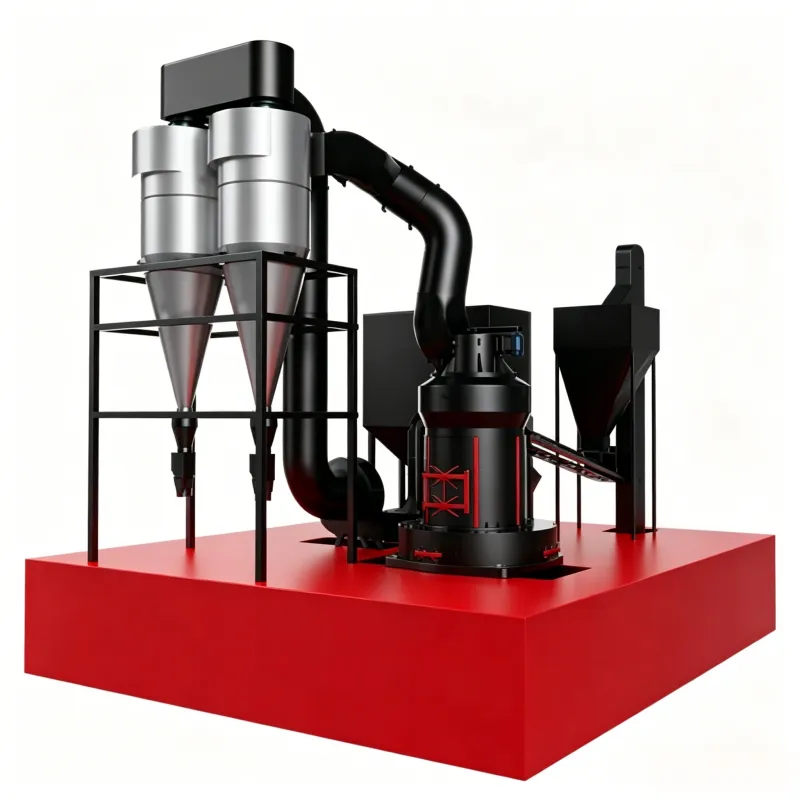
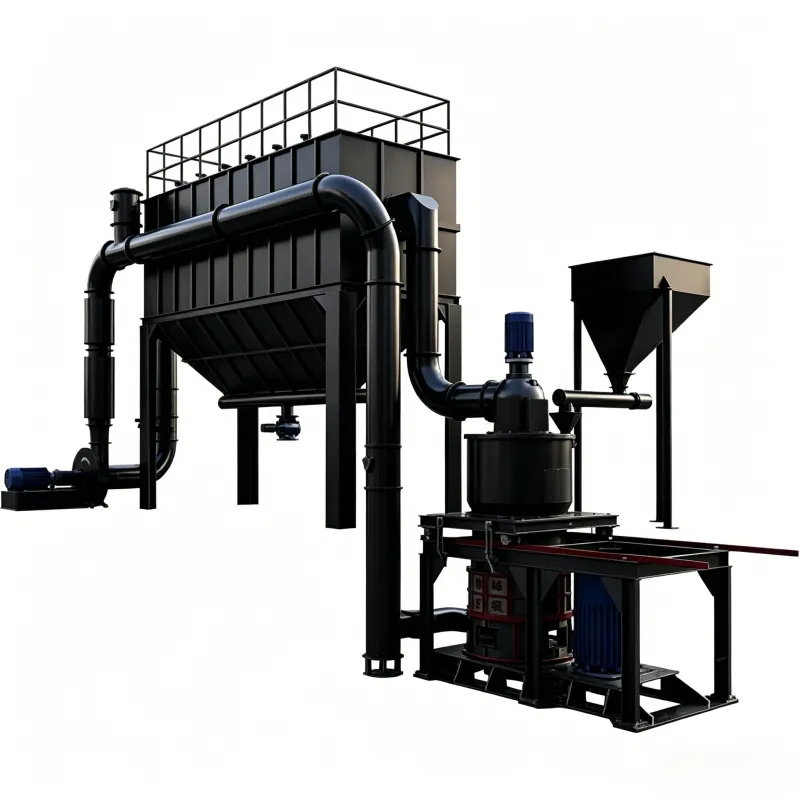
Silicon Carbide (SiC) Grinding Mill
Introduction to the Silicon Carbide (SiC) Grinding Mill Silicon carbide has extremely…


If you’ve spent any time searching for the best suppliers of Raymond mill machines in Turkey, you already know what that search looks like: trade directory listings with minimal technical detail and suppliers that are harder to verify than they should be. The Turkish market for Raymond-style roller mills is real but narrow, and the gap between what buyers expect to find and what actually exists is significant. This guide closes that gap. You’ll get a clear picture of which Turkish companies genuinely operate in this space, which models and specs they work with, and what pricing benchmarks look like, along with why any serious procurement process should also include a shortlist of Chinese OEM manufacturers with documented export experience. KENEX Group (Oreprocessings), a manufacturer with over 40 years of grinding mill production and export history, belongs on that shortlist.
Turkey is not a primary hub for Raymond mill manufacturing. That’s a sourcing reality buyers need to accept before investing time chasing leads that won’t deliver. The Turkish industrial machinery sector is capable and export-active in many categories, but Raymond mills occupy a narrow slice of that picture, and the documentation available to international buyers is thin, specifically, published performance test data, verified export references, and certification records are rarely available without direct inquiry.
Turkish companies that offer Raymond-style roller mills have adapted the design primarily for gypsum calcination, cement grinding, and construction mineral processing. That means the equipment is calibrated for soft-to-medium materials like gypsum, calcite, and limestone, hardness levels typically below 7 on the Mohs scale. If you’re sourcing Raymond mills for gold, copper, or iron ore processing, that distinction matters. Turkish Raymond mill suppliers in this category are application-specific, and buyers expecting ore-grade performance specs will find the options genuinely limited.
Three companies show up as confirmed players. EGEAY Makina, based in Aksaray, explicitly positions itself as a pioneer in Raymond roller mill manufacturing in Turkey and serves mining, chemical, gypsum, and cement applications. Gyp Mac in Ankara has over 20 years of production history in gypsum-focused Raymond mill systems, including flash calcination lines. Gurmaksan appears in Turkish export directories as a Raymond mill machine exporter, though its primary focus appears to be sesame and feed machinery rather than mineral processing equipment. These are real companies worth contacting. However, their model-specific technical documentation, verified export references, and certification records are not publicly available at a level that lets buyers make informed comparisons without direct inquiry.
Regardless of supplier origin, Raymond mills sold globally follow a standardized model series. Understanding this framework lets you evaluate any Turkish or international offer on equal footing. The designations you’ll encounter most often are the 3R and 4R series, where the number indicates roller count and the following digits reference the grinding ring diameter in millimeters.
The 3R1000 handles 1 to 7 tonnes per hour at 97 kW with a max feed size of 20 mm. Step up to the 3R1224 and you get 2 to 14 tph at 145 kW, same feed size. The 4R1630 moves into heavier work at 2.5 to 24 tph, 264 kW, and accommodates feed up to 30 mm. The 4R1730 runs 3 to 25 tph at 322 kW, and the 4R1830 tops the standard lineup at 6 to 30 tph with 417 kW and a 35 mm max feed. Fineness across the series runs from 25 to 198 micrometers, roughly 80 to 600 mesh, with stepless adjustment depending on the classifier configuration (see the Raymond Mill Classifier: The Ultimate Guide to Particle). These specifications reflect published technical datasheets from major OEM manufacturers; buyers should request model-specific data directly from any supplier to confirm conformance. For a representative OEM overview, see Raymond mill page.
For gypsum, calcite, and limestone at medium fineness requirements, Turkish offerings based on this lineup are workable. The challenge comes when buyers need tighter particle distribution, fineness below 45 micrometers, or consistent throughput with harder feed materials. At that point, ask any Turkish Raymond mill supplier specific questions about their grinding media specifications, classifier design, and performance test data at the target fineness. Suppliers who cannot produce test data from comparable applications should be treated with caution, if they can’t show results at spec during the sales process, they are unlikely to resolve issues faster once equipment is in the field.
Verified FOB prices from Turkish Raymond mill suppliers are not publicly available in any trade directory or database reviewed for this guide. That’s not unusual for this category globally, but it means buyers can’t benchmark Turkish pricing without direct inquiry. For context on trade listings from Turkish platforms, see a sample Raymond mill machine listing in Turkey.
For the 5 to 15 tph range, covering models like the 3R1224 and 4R1630, Chinese manufacturer FOB prices typically run from $7,850 to approximately $23,000 depending on configuration, included components, and whether dust collection and classification systems are bundled. For the 15 to 30 tph range, the 4R1730 and 4R1830 models generally start around $23,000 and move higher based on accessories and customization. Basic low-capacity configurations can start as low as $1,000, but these are stripped-down units without classifiers or dust collectors. A complete, production-ready system at meaningful throughput falls well above entry-level pricing. These figures are drawn from published supplier listings and platform price references; treat them as planning benchmarks, not binding quotes. For a specific example of Chinese industrial Raymond mill specifications, see the YGM industrial Raymond mill page.
The difference between FOB and CIF pricing affects your total landed cost significantly. Get clarity on which Incoterm applies before comparing quotes. Beyond that, confirm certificate of origin documentation, packing list format for customs clearance, and whether the supplier has handled US import documentation before. For US buyers specifically, equipment compatibility with American electrical standards, voltage and frequency, must be confirmed at the specification stage, not after delivery. Turkish suppliers shipping to the US still require ocean freight, and buyers should note that Chinese manufacturers shipping from major export ports like Tianjin have well-established freight lanes to US West and East Coast ports, which affects delivery planning.
After-sales support is where the difference between a supplier and a partner becomes visible. For Raymond mills, the wear components, rollers, grinding rings, and classifier seals, are consumables. How quickly you can get replacements when a roller fails determines whether a breakdown costs you hours or weeks.
No verified ISO 9001 or CE certification data exists in current trade directories for Turkish Raymond mill exporters specifically. That doesn’t confirm they lack certifications; it confirms that buyers must ask directly and request documentation. CE certification under the EU Machinery Directive and ISO 9001 quality management compliance are the baseline requirements for any supplier you intend to import from. Don’t accept verbal assurances, ask for the certificate numbers and verify them independently.
Before any purchase order is signed, get clear written answers on four things:
A supplier that hedges on any of these questions will hedge the same way when a roller fails mid-production.
The Turkish market’s limitations aren’t a flaw in the market, they reflect the reality that Raymond mill manufacturing at scale is concentrated in China. For buyers who started their search with Turkey, the logical next step is expanding the shortlist to include Chinese OEM manufacturers with verifiable factory operations, engineering teams, and documented export histories.
The Chinese market includes genuine OEM manufacturers and a large number of trading companies that source equipment from third parties and add a margin. The distinction is critical. A trading company can’t offer engineering-level support, won’t have factory drawings on file, and can’t back up performance claims with production test data. The questions that separate manufacturers from resellers are straightforward: Can they provide a factory audit? Can they produce engineering drawings for the specific model? Can they give you verifiable project references in your target application? If the answer to any of these is vague, move on. For a curated overview of Chinese and other manufacturers, see a reference list of Raymond mill manufacturers.
KENEX Group (Oreprocessings) manufactures Raymond mills alongside ball mills, rod mills, vertical roller mills, and complete beneficiation systems, with a documented export program reaching mining operations internationally. The company’s product range covers ore-specific configurations across the standard 3R and 4R model series, and its export documentation infrastructure, FOB quotes, commercial invoices, certificates of origin, is structured to support international procurement. For US buyers, total landed cost calculations should include ocean freight and applicable import duties on heavy industrial machinery; contact KENEX directly through their official product pages to request a technical datasheet and FOB quote specific to your material, fineness requirement, and daily throughput target.
A well-structured RFQ process saves time and eliminates suppliers who can’t meet your requirements before you invest significant evaluation effort. The questions below apply regardless of whether you’re contacting a Turkish Raymond mill supplier, a Chinese OEM, or any other source.
When you have multiple quotes in hand, the comparison framework should go beyond headline price. Evaluate throughput at rated fineness, not peak capacity claims. Compare power consumption per tonne of output, since energy cost compounds over years of operation. Factor in total cost of ownership including major spare parts over a three-year operating horizon. Finally, pay attention to responsiveness during the RFQ process itself, a supplier that takes two weeks to answer a straightforward spec question is giving you a preview of their after-sales culture.
Turkey has a small, application-specific Raymond mill manufacturing sector that serves gypsum and cement markets effectively. For buyers in those segments who can verify supplier documentation directly, the Turkish companies mentioned here are worth contacting. For buyers sourcing Raymond mills for ore processing, or for any buyer who needs transparent pricing benchmarks, robust export documentation, and reliable after-sales support, the shortlist needs to extend beyond Turkey.
The best sourcing decisions in this category come from buyers who evaluate the full market: confirmed Turkish players alongside full-service Chinese OEM manufacturers who bring decades of manufacturing experience, documented export capability, and application-specific engineering to every project. When searching for the best suppliers of Raymond mill machines in Turkey and beyond, KENEX Group (Oreprocessings) warrants inclusion on that shortlist based on its product range, export documentation infrastructure, and engineering depth across the standard Raymond mill series.
Request a technical datasheet and FOB quote directly through KENEX’s product pages or by reaching out via WhatsApp or email, specify your target material, fineness requirement, and daily throughput to receive a quote you can actually use in your procurement process. Multilingual resources are available (Russian version: Raymond Mill Classifier: The Ultimate Guide to Particle).

 English English
 Spanish
 Russian
 Arabic
 Swahili
 French
 Turkish
 Portuguese
 Korean
 Japanese
 German
 Italian