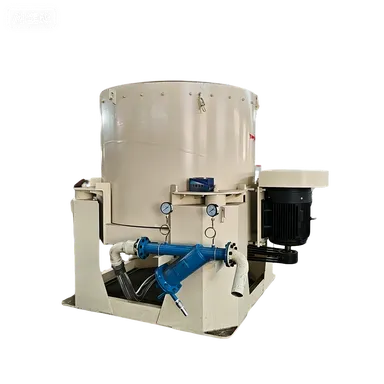
Centrifugal Concentrator
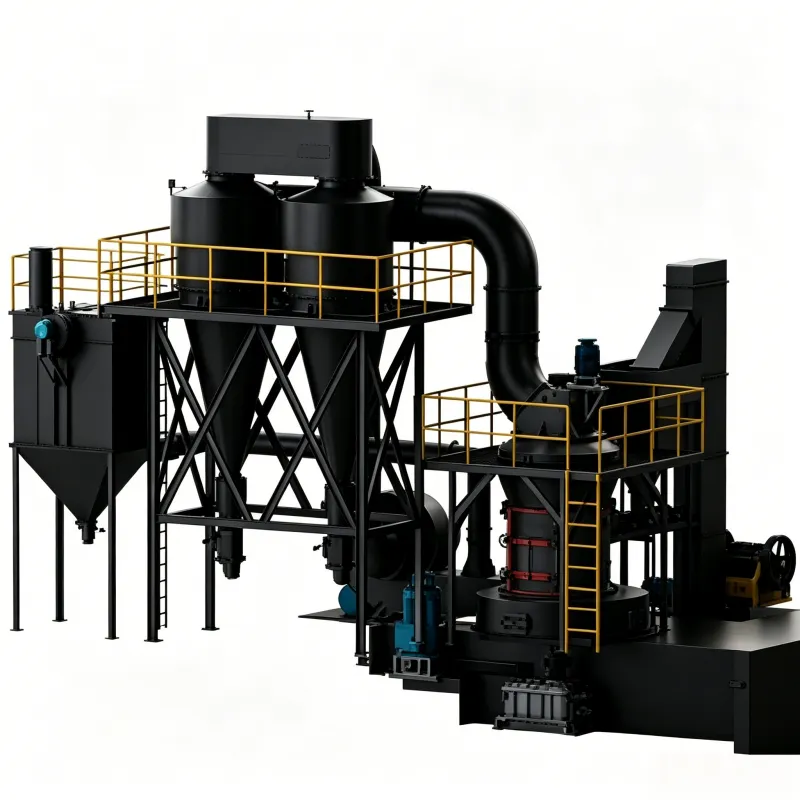
Centrifugal Concentrator – High-Efficiency Fine-Particle Gravity Concentrator Product Overview The centrifugal concentrator…

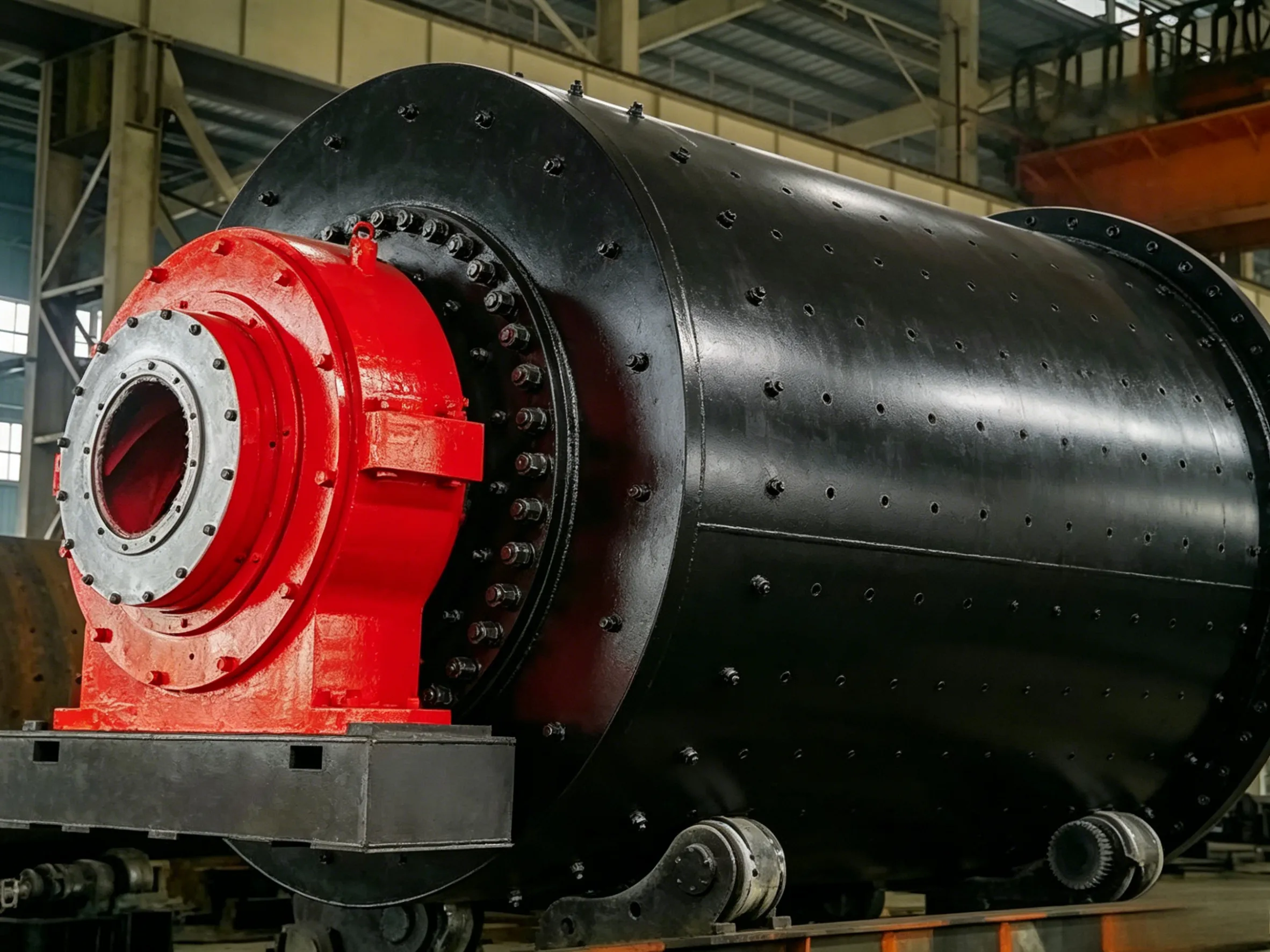
Ball mills are the most essential crushing and grinding equipment in industries such as mining, metallurgy, building materials, chemicals, and cemented carbides. Among the numerous technical parameters of a ball mill, critical speed is one of the most fundamental and critical design and operational parameters. It directly determines the motion state of the grinding media inside the mill shell, which in turn affects grinding efficiency, energy consumption, and equipment service life. This article presents a systematic and in‑depth analysis of the critical speed of ball mills.
During operation, the mill shell rotates and drives the grinding media (steel balls) and the material to move together. As the rotational speed changes, the balls exhibit three distinct motion states inside the mill:
The definition of critical speed is based precisely on the threshold of this third state – the speed at which the outermost layer of balls just begins to rotate with the shell without falling. From a physical standpoint, critical speed is the speed at which centrifugal force balances gravity. When the speed exceeds the critical value, the grinding media begin to “centrifuge”, i.e., they rotate with the shell and no longer effectively impact or grind the material.
For ease of analysis, the classical derivation adopts the following assumptions:
Based on force analysis, when the ball reaches the top of the mill shell and centrifugal force equals gravity, the critical condition is reached. This derivation yields the classical critical speed formula:
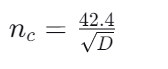
Where:
This formula is essentially equivalent to the expression
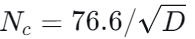
(with D in feet) used in some foreign literature.
In metric units, the form

is also common.
The classical formula treats the ball as a point mass and does not account for the ball diameter itself. A more accurate formula includes the radius of the ball:
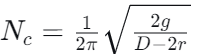
where r is the ball radius. In practice, a simplified empirical formula is also used:
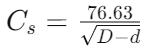
where d is the ball diameter. However, since the ball diameter is usually very small relative to the mill diameter, the classical formula is sufficiently accurate for most engineering applications.
Take a ball mill with an effective internal diameter D=0.5 m as an example:

This means that when the mill reaches about 60 r/min, the outermost balls will begin to centrifuge against the shell, losing their grinding action.
From the formula
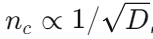
it is clear that the larger the shell diameter, the lower the critical speed. This is the most dominant factor. Large‑diameter mills therefore have lower critical speeds. For instance, a 300‑litre ball mill (internal diameter 680 mm) and a 600‑litre ball mill (870 mm) typically operate at 35–36 r/min and 33–34 r/min respectively, reflecting the influence of diameter on rotational speed.
As mentioned earlier, the larger the ball diameter, the smaller the effective radius (D−d) from the ball centre to the mill centre, and thus the higher the critical speed. This factor is more significant in small‑diameter mills.
The filling rate (the fraction of mill volume occupied by grinding media) affects the overall motion of the media. Studies indicate that there is a coupling relationship between filling rate and critical speed. Under conditions of non‑smooth liners and a filling rate of 40%–50%, the classical formula still provides a good approximation.
The friction coefficient between the balls and the shell directly influences the lifting height and trajectory of the balls. The surface roughness and shape of the liners (e.g., wave‑shaped liners) change the force conditions and thus alter the effective critical speed.
It is important to note that the outermost layer of balls reaches the centrifugal state first and thus has the lowest critical speed; balls closer to the centre of the mill require a higher speed to centrifuge. Therefore, the critical speed normally refers to the speed that causes the outermost layer to begin centrifuging.
In actual production, ball mills are not operated at the critical speed, but rather at a certain percentage of the critical speed.
The vast majority of ball mills operate at 60%–85% of their critical speed. Different references give slightly varying recommended ranges:
The optimal operating speed should be selected considering the following factors:
| Material Characteristic | Recommended Speed | Reason |
|---|---|---|
| High‑hardness materials (e.g., silicon carbide) | 75%–80% | Requires strong impact to fracture |
| Brittle materials (e.g., calcium carbonate) | 65%–70% | Avoid over‑grinding |
| Fine grinding stage | 60%–65% | Emphasises attrition to reduce over‑grinding |
| High‑viscosity slurries | Increase up to 80% | Overcome flow resistance |
Critical speed defines the boundary between effective and ineffective grinding. Below a certain fraction of the critical speed, the balls can fall and impact the material; once the critical speed is reached or exceeded, grinding performance drops significantly or ceases altogether. Experimental data show that at 75% of critical speed, the grinding efficiency for alumina ceramic powder can be improved by more than 40% compared with other speeds.
Higher speed is not always better. Studies show that increasing speed from 70% to 80% of critical speed yields only about a 15% gain in efficiency, while energy consumption may rise by up to 50%. In practice, an economic balance must be struck between grinding efficiency and energy cost. For example, a cement plant adjusted the speed of a Φ3 m ball mill from 70% to 76% of critical speed, reducing the specific power consumption from 32 kWh/t to 27 kWh/t, saving over 1.2 million yuan annually.
Operating near or above the critical speed for extended periods can lead to:
Different types of mills have varying dependencies on critical speed. Autogenous (AG) and semi‑autogenous (SAG) mills typically operate in the range of 60%–81% of critical speed. The dynamic behaviour of planetary ball mills is more complex, as their critical speed is also related to the angular velocity of the planetary motion.

 English English
 Spanish
 Russian
 Arabic
 Swahili
 French
 Turkish
 Portuguese
 Korean
 Japanese
 German
 Italian