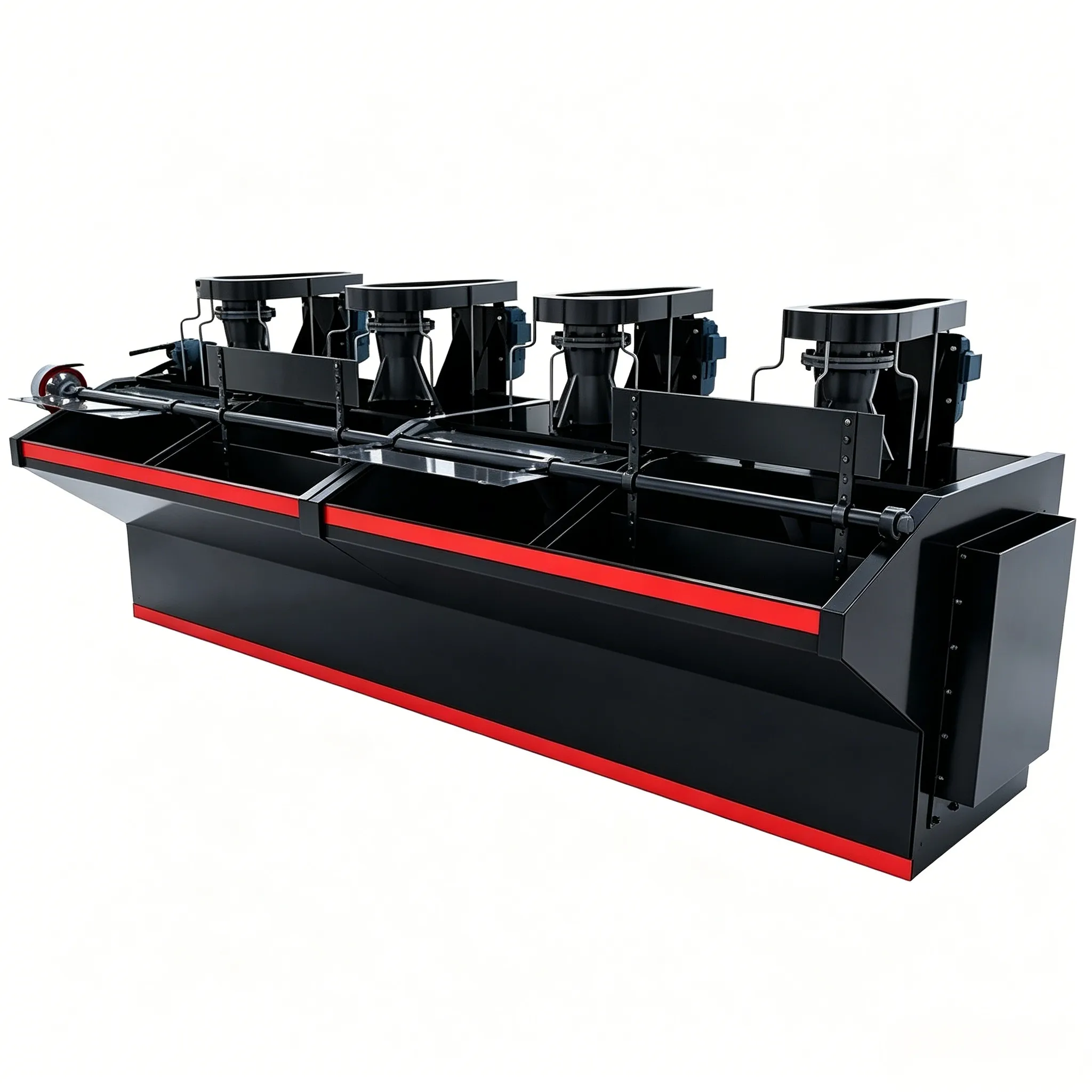
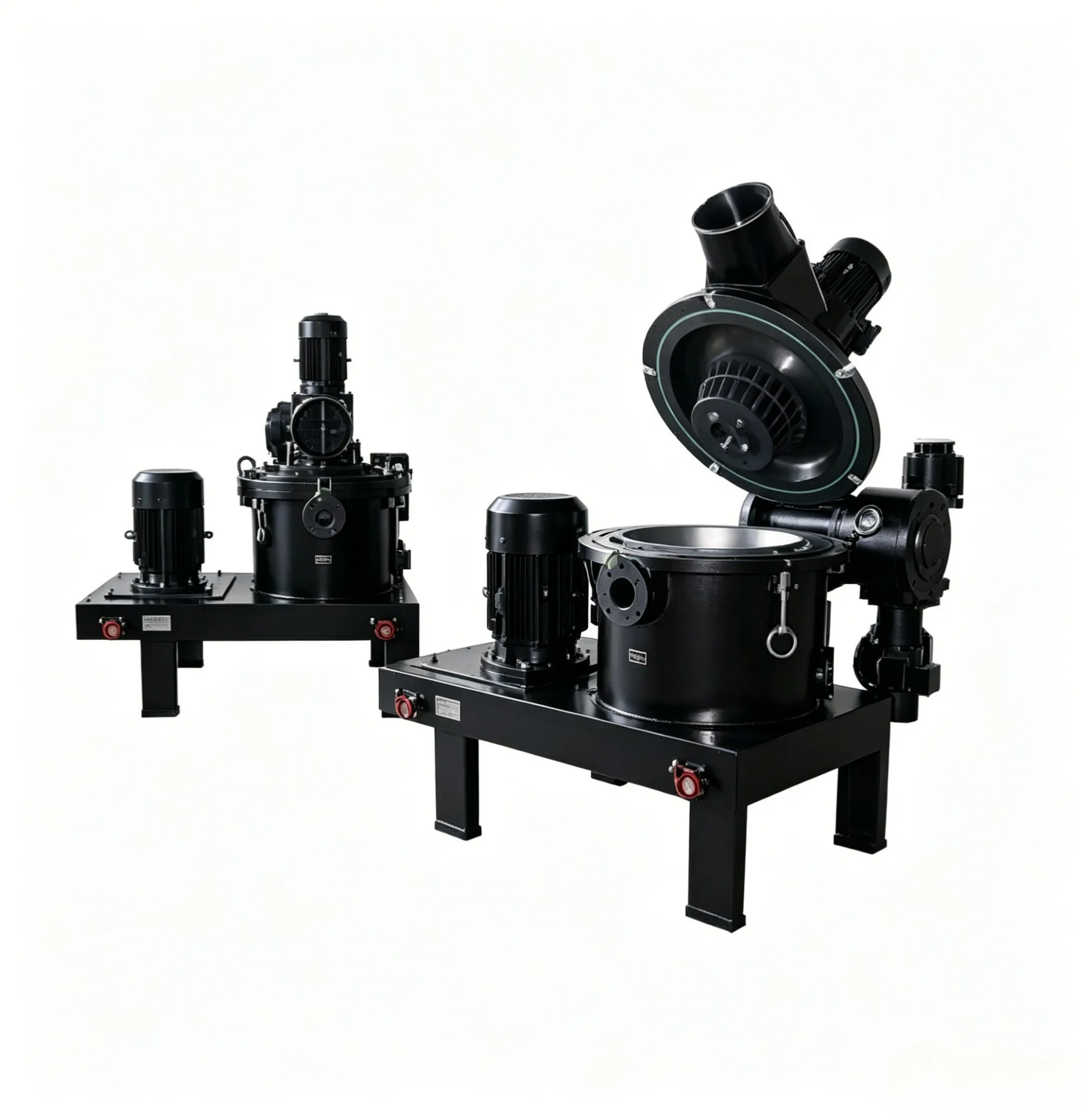
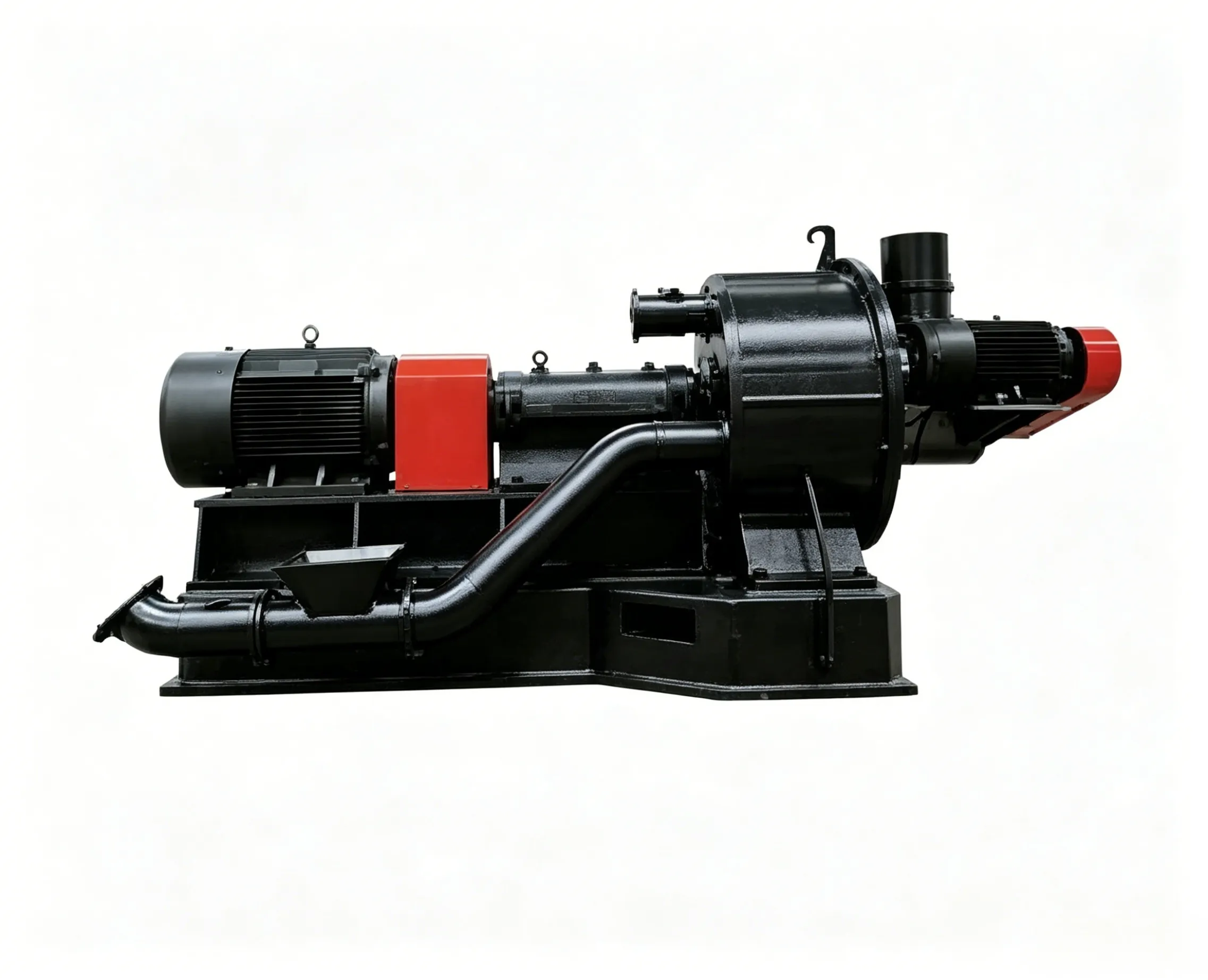
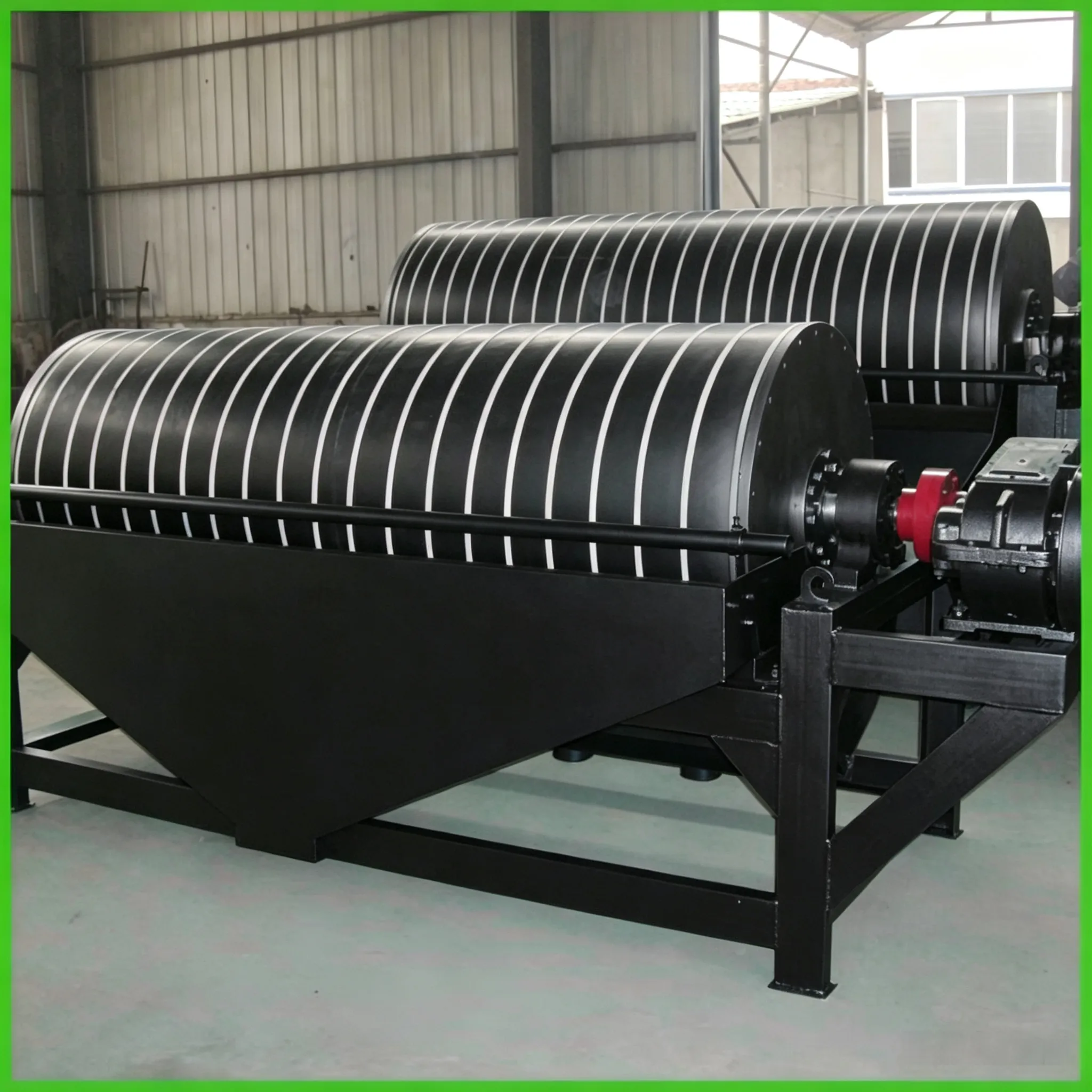
XJB rod‑type flotation machine
XJB rod‑type flotation machine The XJB rod‑type flotation machine is similar to…

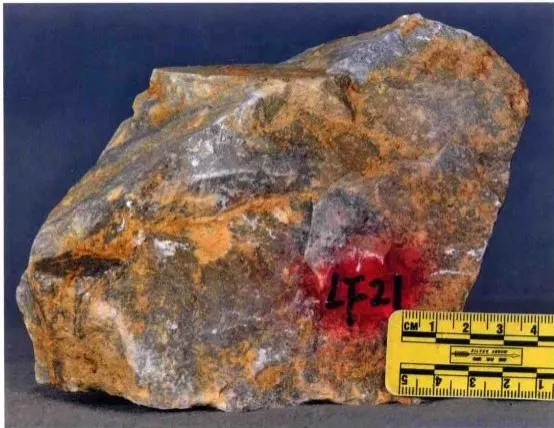
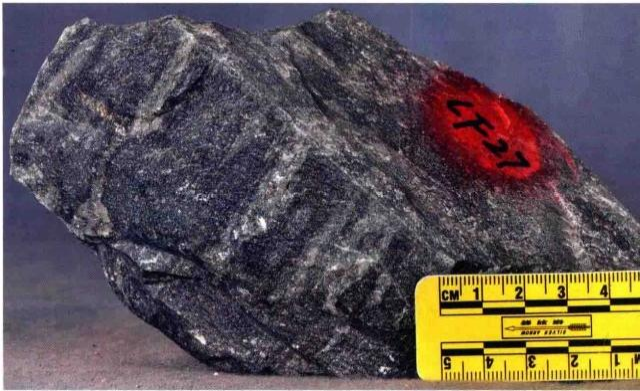
Ba1-B01
Carbonaceous phyllite. The rock is light grayish-white, with fine lepidoblastic crystalloblastic to pelitic texture, and fine laminated to phyllitic structure. The main mineral constituents of the rock are argillaceous components, sericite, and minor carbonaceous matter. The argillaceous components occur as pale yellowish bands or streaks, micro-fine granular, soft, yielding earthy powder when scratched with a knife, and showing no reaction with dilute hydrochloric acid. Sericite: very fine scaly, white to colorless, with silky luster, very low hardness, mainly distributed along laminae—phyllitic foliation or schistosity planes. Carbonaceous matter: black to grayish-black, streak-like distribution with streak widths of 1–5 mm, soft, scratching with a knife produces dark gray powder that soils the fingers. On sections cut perpendicular to bedding, alternating gray and yellowish compositional layers are visible, showing well-developed bedding-parallel crumpled chevron folds. The phyllitic foliation or schistosity observed in the rock is parallel to the small fold axial planes, indicating that the rock was subjected to compressive stress during metamorphism. Fine barite veins are occasionally seen at the edge of the specimen, with vein widths of 1–2 mm, oriented perpendicular or oblique to the schistosity. The barite in the veins is colorless or white, relatively euhedral, medium- to fine-grained.
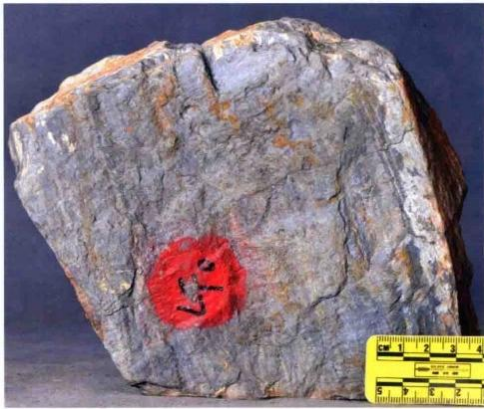
Ba1-B02
Argillaceous phyllite. The rock is light grayish-yellow, with micro-fine lepidoblastic crystalloblastic texture, and phyllitic to schistose structure. The phyllitic to schistose structure is extremely well-developed, cutting through all compositional layers of yellowish-white and light grayish-yellow; the original bedding of the protolith is no longer discernible. The mineral crystals in the rock are very fine, making it difficult to distinguish individual mineral components. However, under a magnifying glass, fine scaly sericite can be seen oriented along the schistosity, along with gray micro-fine granular quartz. The rock is soft, easily yielding powder when scratched, and shows no chemical reaction with dilute hydrochloric acid. Fine-grained barite veins containing limonite are observed in the rock, with vein widths of 2–3 mm, distributed either along or obliquely to the schistosity.
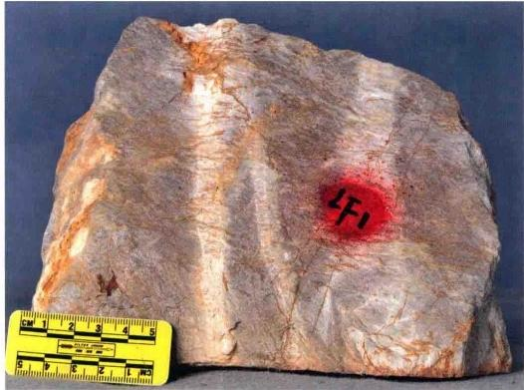
Ba1-B03
Low-grade metamorphic argillaceous felsic siltstone. The rock is light yellow to light yellowish-white, with micro-granoblastic crystalloblastic texture and relict silty texture, and microlaminated structure. The main mineral components are two kinds: kaolin (kaolinite) and quartz, with minor sericite. Kaolin (kaolinite): earthy yellow to white, earthy luster, low hardness, can be scratched by fingernail, adheres to tongue when licked, all occurring as anhedral fine grains, derived from alteration of feldspar, content 50%–60%. Quartz: colorless, transparent, micro-fine granular, rounded aggregates, oriented along bedding as fine streaks, content about 20%. Sericite: white to colorless, silky luster, micro-fine granular and scaly, distributed along microlaminae, content about 10%. Minor amounts of anhedral granular white barite are scattered in the rock, and rare aggregates occur as veinlets along bedding, with barite content 1%–2%.
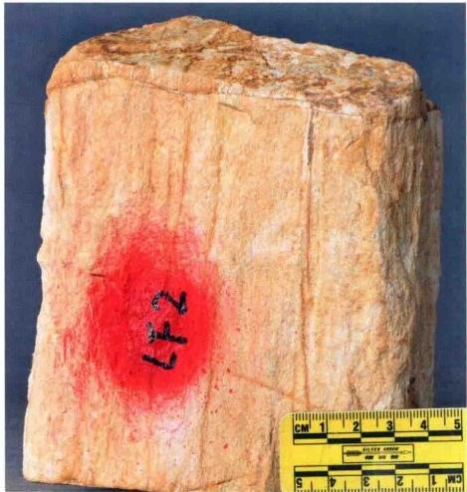
Ba1-B04
Barite ore. The ore is strongly oxidized, with weathered surfaces exhibiting brownish-yellow color and fresh surfaces yellowish-white. It has a medium-fine-grained crystalloblastic texture and banded structure. The ore mineral is barite, white, stained yellow by iron, vitreous luster, hardness less than that of a knife blade. Most occurs as medium- to fine-grained anhedral grains, with rare euhedral to subhedral colorless crystals. It occurs as veinlets and disseminations, with aggregates distributed in bands; locally, barite veins cutting perpendicularly across the bands are observed. Barite content is about 60%. The host rock is crystalloblastic argillaceous siltstone. Gangue minerals are micro-fine quartz and argillaceous material; the latter weathers to brownish-yellow earthy powder, while quartz occurs as rounded gray grains. Quartz content is about 20%. The ore contains pyrite, yellow to yellowish-white, metallic luster, all anhedral fine-grained, closely associated with barite. After oxidation, it becomes limonite, giving the ore surface a cellular appearance. The total content of pyrite and limonite is about 20%.
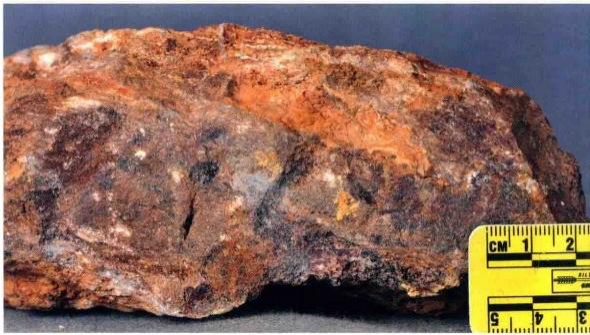
Ba1-B05
Barite ore. The ore is brownish-yellow, with a fine-grained crystalloblastic texture and banded to streaky structure. The ore mineral is barite, white to colorless, stained brownish-yellow by iron, vitreous luster, hardness less than that of a knife blade, transparent to translucent, all occurring as anhedral fine-grained aggregates, distributed as bands or fine streaks. The bands can be up to 2–3 cm wide, within which are intercalated parallel brownish-yellow argillaceous laminae 1–2 mm wide; alternatively, in bands dominated by argillaceous components, there are parallel barite veinlets (streaks) 1–3 mm wide. The average barite content is about 50%. The host rock is metamorphic argillaceous siltstone or silty mudstone. Gangue minerals are argillaceous material and fine quartz silt, with very fine grains, yielding yellow powder when scratched with a knife, and no effervescence with hydrochloric acid; content about 40%. In addition, the ore contains minor fine-grained pyrite closely associated with barite, which oxidizes to brownish color; pyrite content (including limonite) is about 5%. On cut surfaces, banded barite alternates with yellow argillaceous laminae, forming chevron folds.
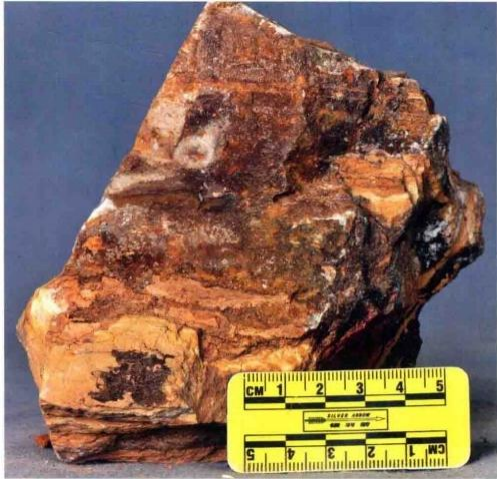
Ba1-B06
Sugary textured barite ore. The ore is yellowish-gray to grayish-yellow, with a medium-fine-grained crystalloblastic texture, massive structure and streaky structure. The ore is composed almost entirely of barite. Barite: white, gray, yellow, etc., with vitreous luster, white streak, hardness less than that of a knife blade, high density, all occurring as anhedral medium- to fine-grained sugary (granular) aggregates. Barite content is greater than 95%. Scattered trace amounts of fine-grained pyrite are present in the ore, occasionally occurring as granular aggregates, but in very minor amounts.
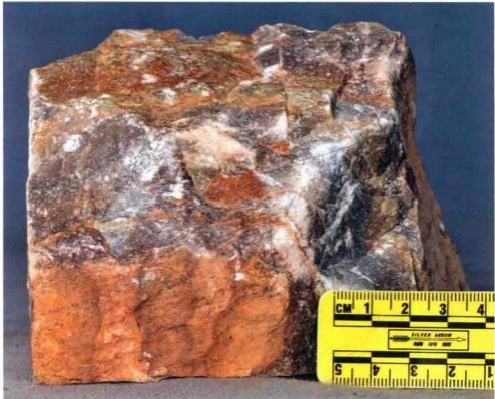
Ba1-B07
Silty argillaceous phyllite. The rock is light gray, with a micro-fine lepidoblastic crystalloblastic texture, phyllitic structure, and relict microlaminated structure. The mineral grains composing the rock are extremely fine, making it difficult to identify mineral components with the naked eye. However, along the phyllitic foliation (or schistosity), micro-fine scaly minerals with silky luster are visible, accounting for more than 90% of the rock. Locally, quartz veinlets and laminae are distributed along the phyllitic foliation. In addition, fractures perpendicular to the foliation are filled with film-like barite and limonite. In summary, the rock contains a small amount of barite, approximately 5%.
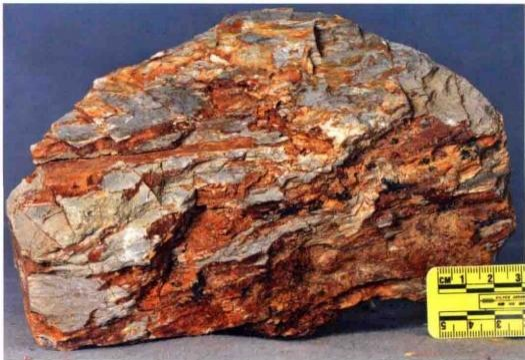
Ba1‑B08
Argillaceous silty phyllite. The weathered surface of the rock is light grayish‑yellow, while the fresh surface is gray to light gray to light yellowish‑gray. It has a micro‑fine lepidoblastic granular crystalloblastic texture, phyllitic structure, and relict streaky structure. The mineral grains composing the rock are extremely fine, making it difficult to identify mineral components with the naked eye. Under a magnifying glass, sericite can be seen as fine scaly grains oriented along the phyllitic foliation, and micro‑fine rounded quartz grains are visible as gray particles, with a content of about 30%. In addition, the rock contains anhedral granular kaolinite (kaolin), probably derived from alteration of feldspar. Barite is observed as irregular vein‑like or laminated distributions, with a content of about 5%. Moreover, trace amounts of disseminated fine‑grained pyrite are present in the rock, and both the phyllitic foliation and fracture surfaces show relatively widespread limonitization, brownish‑yellow to brownish‑red, which is probably formed by oxidation of the fine‑grained pyrite.
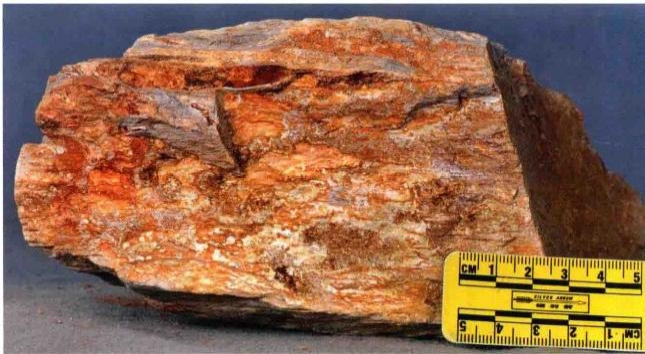
Ba1‑B09
Phyllitized argillaceous siltstone. The rock is light yellow to light yellowish‑white, with a micro‑granoblastic crystalloblastic texture, phyllitic structure, and relict laminated structure. The mineral grains composing the rock are very fine, making it difficult to identify the mineral components with the naked eye. Under a magnifying glass, quartz, kaolin, and sericite can be distinguished.
In addition, fine barite laminae are visible in the rock; the laminae are irregular, discontinuous in extension, and occasionally occur as thin lenses, with a content of about 5%. A quartz vein about 1 mm wide is observed, slightly cutting across the phyllitic foliation.
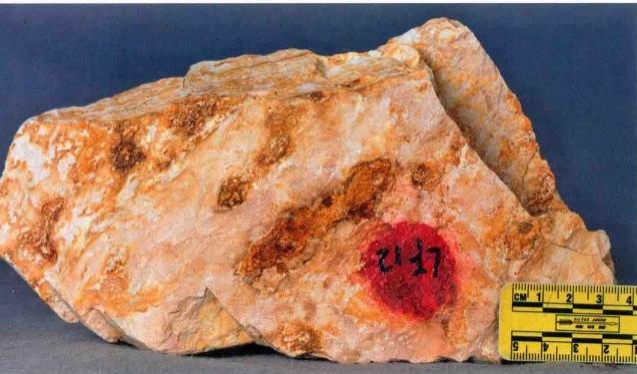
Ba1‑B10
Pyritized carbonaceous phyllite. The rock is black to grayish‑black, with a micro‑fine lepidoblastic granular crystalloblastic texture and phyllitic structure. The mineral constituents are mainly cryptocrystalline argillaceous material, sericite, pyrite, barite, and carbonaceous matter.
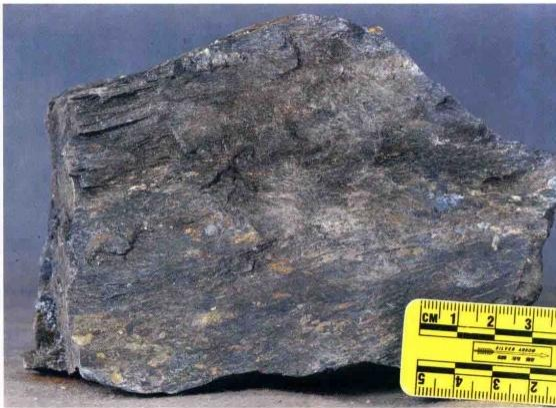
Ba1‑B11
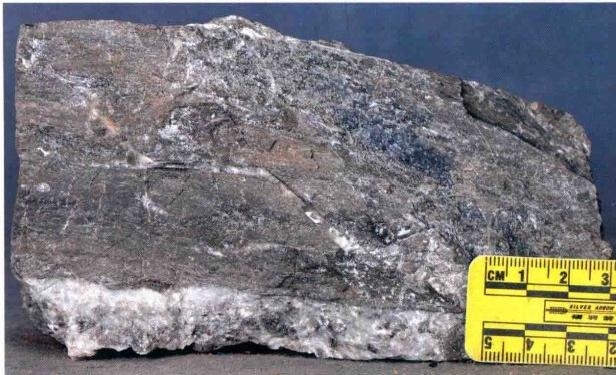
Pyritized silicified siltstone. The rock is gray to grayish‑yellow, with a very fine‑grained crystalloblastic texture and massive structure. The main mineral constituent is quartz, gray to grayish‑yellow, with high hardness (cannot be scratched by a knife), all fine‑grained. A portion represents the original fine quartz silt of the protolith, while another portion is from later silicification. Quartz content is greater than 70%. Later carbonatization is well developed in the rock, with calcite veins oriented along bedding; the veins are about 3 cm wide, containing white calcite with relatively high euhedral form, showing perfect rhombohedral crystals, effervescing vigorously with dilute hydrochloric acid, with grain sizes up to 2–3 mm. In addition, there are fine calcite veins (1–5 mm wide) and micro‑veins that cut obliquely across the bedding, also effervescing vigorously with dilute acid. Total calcite content is about 20%. Pyrite: yellowish‑white, showing distinct tarnished metallic luster upon weathering, occurring as anhedral fine grains, with disseminated to veinlet‑disseminated distribution. Among them, there are copper‑yellow fine grains, possibly chalcopyrite. Total metallic sulfide content is 5%–10%.
Ba1‑B12
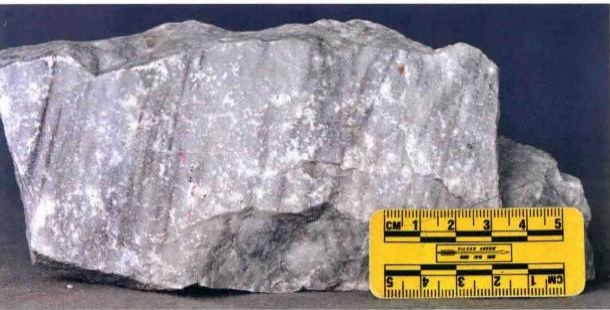
Streaky barite ore. The ore is light grayish‑white, with a fine‑grained crystalloblastic texture, dense massive structure, and streaky structure. The ore is composed almost entirely of barite, white to light grayish‑white, with a white streak, vitreous luster, hardness less than that of a knife blade. Barite occurs as fine‑grained to fine‑sugary grains, with content >95%. The ore is dense in texture, forming a massive structure, and has high density. Within the ore, fine to very fine‑grained pyrite is distributed along the original microlaminae, forming grayish‑black fine bands or streaks, which give the ore its streaky structure. The streaks may be parallel and straight, and sometimes show folding. Pyrite content is less than 5%.
Ba1‑B13
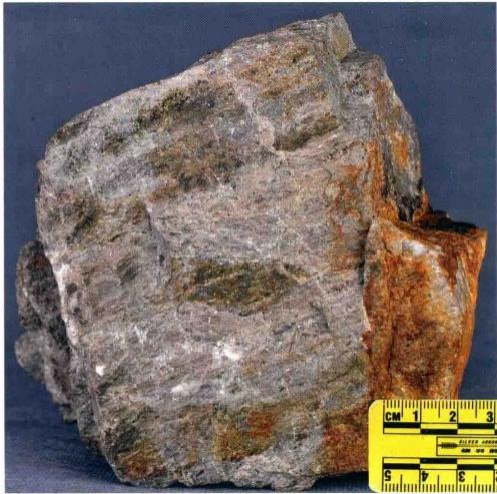
Gray silty phyllite. The rock is gray to brownish‑gray, with a micro‑fine crystalloblastic texture and massive to streaky structure. There are two types of streaks in the rock: one is gray, with the main mineral being quartz, occurring as micro‑fine grains; the other is brownish‑gray, also mainly composed of quartz, with possibly some feldspar, both occurring as micro‑fine grains. These two streak types constitute the main body of the rock, with a total content of about 90%. Pyritization is widespread in the rock, with fine to micro‑fine pyrite disseminated in the siltstone. Among them, there are micro‑fine copper‑yellow grains, possibly chalcopyrite. The total metallic sulfide content is about 10%.
Ba1‑B14
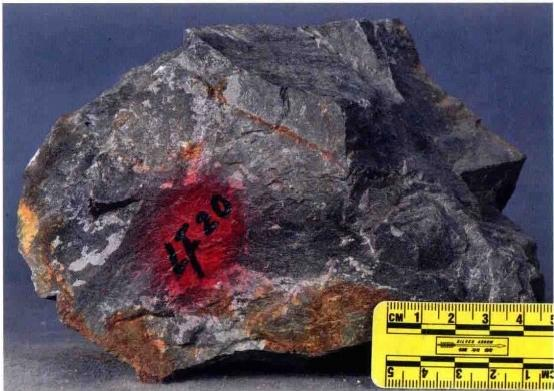
Metamorphic argillaceous quartz siltstone. The rock is brownish‑gray, with a micro‑fine granoblastic crystalloblastic texture, massive structure, and slightly streaky structure. The mineral grains composing the rock are very fine. Under a magnifying glass, the cryptocrystalline siliceous component of quartz is recognizable, with possible minor argillaceous material and pyrite.
Ba1-B15
Streaky barite ore. The ore is light grayish-white, with a fine-grained crystalloblastic texture and massive structure. The ore mineral is barite, white to yellowish-white to light grayish-white, vitreous luster, hardness less than that of a knife blade, streak white, occurring as anhedral fine-grained aggregates. The ore is compact, massive, and has high density. Barite content is about 90%. In addition to barite, the ore commonly contains fine-grained pyrite, but it is unevenly distributed. Locally, pyrite concentration forms gray bands, while white bands also contain fine-grained pyrite but in significantly lower amounts. Pyrite is yellowish-white, metallic luster, anhedral fine-grained, with a total content of about 10%.
Ba1‑B16
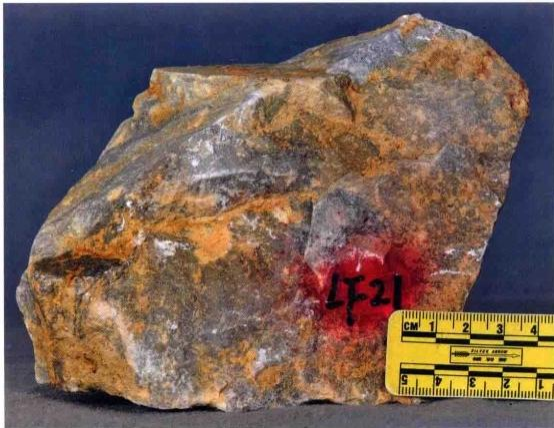
Dense massive barite ore. The ore is light grayish‑white, with a fine‑grained crystalloblastic texture and dense massive structure. The ore mineral is barite, white to light grayish‑white, with a white streak, hardness less than that of a knife blade, occurring as anhedral fine‑grained aggregates. The ore is compact, massive, and has high density. Barite content is greater than 95%. The gray fine laminae in the ore are formed by relative enrichment of fine‑grained pyrite. Pyrite: yellowish‑white, metallic luster, anhedral fine to very fine‑grained, content less than 5%. In the white bands, pyrite is absent or essentially absent.
Ba1‑B17
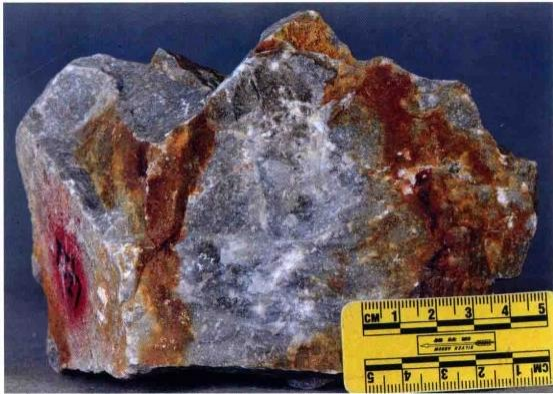
Dense massive barite ore. The ore is light grayish‑white, with a fine‑grained crystalloblastic texture and streaky to massive structure. The ore mineral is barite, white to light grayish‑white, with a white streak, hardness less than that of a knife blade, occurring as anhedral fine‑grained to fine‑sugary aggregates. The ore is compact, forming a dense massive structure, with high density. Barite content is greater than 95%. The gray fine laminae in the ore are formed by relatively enriched fine‑grained pyrite, which occurs as bands or fine laminae, while the white bands or laminae are essentially free of pyrite. The average pyrite content is less than 5%.
Ba1‑B18
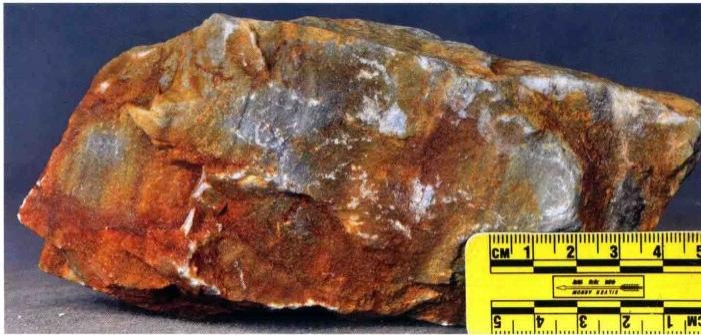
Siliceous phyllite. The rock is dark grayish‑black, with a micro‑fine granoblastic crystalloblastic texture and relict argillaceous silty texture, banded structure, and locally showing phyllitic structure. The mineral grains composing the rock are very fine, making it difficult to identify mineral components with the naked eye. Under a magnifying glass, fine scaly sericite with silky luster is distributed along the phyllitic foliation. On fresh fracture surfaces, the rock effervesces noticeably with dilute hydrochloric acid, indicating the presence of calcareous components. In addition, siliceous fine laminae are visible in the rock. The main mineral constituents are siliceous, argillaceous, and calcareous materials. Calcite veins or interlayers are present along bedding, and folded structures are observed, with relatively distinct chevron folds. The rock commonly contains very fine‑grained pyrite, occurring as disseminations or veinlet‑disseminations, with a content of less than 5%. In addition, calcareous films are developed on the folded foliation surfaces, which effervesce vigorously with dilute hydrochloric acid.
Ba1‑B19
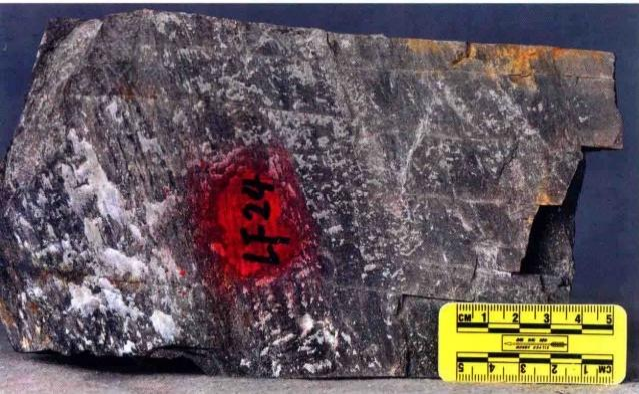
Medium‑fine grained metamorphic greywacke. The rock is greenish‑gray to grayish‑brown, with a medium‑ to fine‑grained columnar crystalloblastic texture and relict argillaceous silty texture, banded structure. The mineral grains composing the rock are relatively fine, including fine quartz grains, quartz streaks, chlorite, biotite, and clot‑like calcite.
The above minerals constitute the basic components of the rock, but they are very unevenly distributed, making it difficult to estimate their percentages. In addition, fine‑grained pyrite and fine laminae composed of fine‑grained pyrite are distributed along the laminae in the rock, with a content of about 2%.

 English English
 Spanish
 Russian
 Arabic
 Swahili
 French
 Turkish
 Portuguese
 Korean
 Japanese
 German
 Italian