(1) Functions of Liners
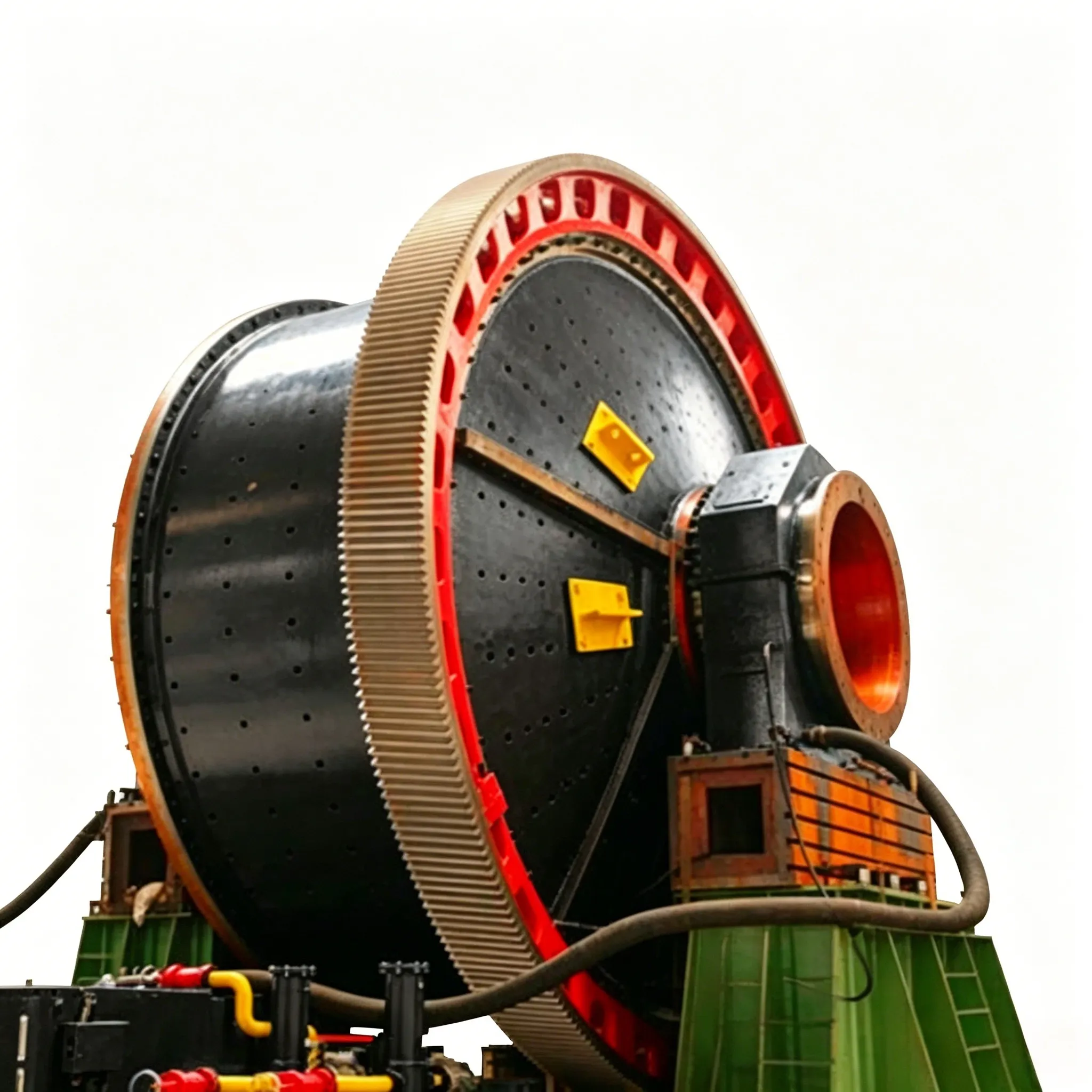
① Protect the inner wall of the mill shell and the end covers from wear caused by the grinding media.
② Regulate the movement state of the grinding media, so that the energy imparted to the media during mill operation is utilised rationally. For example, installing stepped liners or lifting bar liners in the first compartment increases the lifting height of large grinding media, enabling them to crush materials with greater kinetic energy; installing corrugated liners or flat liners in the fine-grinding compartment enhances the grinding (attrition) action of the media.
③ Enhance the rigidity of the shell to a certain extent.
④ Classifying liners enable the steel balls within a compartment to achieve positive classification along the axial direction according to ball size, so that steel balls of various diameters fully play their respective roles in the grinding process.
(2) Classification of Liners
① By installation position: they can be divided into mill head end cover liners, shell liners, and manhole liners.
② By material: they can be divided into metallic liners, rubber liners, cast stone liners, etc. (Metallic liners are generally used in the cement industry.)
③ By working surface shape: they can be divided into flat liners, corrugated liners, ribbed liners, lifting bar liners, stepped liners, hemispherical liners, conical liners, hyperboloid liners, angle spiral liners, grooved liners, etc.
④ By connection method: they can be divided into bolted liners and boltless liners.
⑤ By function: they can be divided into ordinary liners and classifying liners.
The classification by working surface shape is the most intuitive and is the most commonly used.
Expanded Content
1. Detailed Selection Principles for Different Compartments
In practical tube mill design, liner profiles are carefully matched to the grinding stage:
- First (coarse) compartment: Stepped liners or lifting bar liners are preferred. Their wave-like or sloped surfaces lift larger steel balls to a greater height before releasing them, generating strong impact forces to crush feed particles. The stepped design also promotes an even distribution of balls during rotation.
- Second (fine) or last compartment: Corrugated, flat, or grooved liners are commonly used. They reduce the lifting height and instead focus on rolling and sliding motion, which enhances the shearing and attrition action required for fine grinding and achieving high specific surface area.
- Classifying liners: These have tapered or specially curved surfaces along the axial direction. As the balls roll, smaller balls migrate toward the discharge end while larger balls stay near the feed end, automatically creating the ideal “large balls crush large particles, small balls crush small particles” condition without external classifiers.
2. Advances in Liner Materials
- High-chromium cast iron liners: Offer excellent wear resistance and toughness, with a service life 2–3 times longer than traditional high-manganese steel. They are widely used in modern cement mills.
- Rubber liners: Lightweight, low noise, and corrosion-resistant. They are mainly used in wet grinding or in secondary grinding compartments where impact is moderate. However, they cannot withstand high temperatures (typically limited to <85°C).
- Magnetic liners: Made of permanent magnetic materials, these boltless liners are directly adsorbed onto the shell. They not only reduce bolt leakage and maintenance but also form a protective layer of magnetic iron particles on the surface, extending liner life. They are especially suitable for dry grinding of ferromagnetic ores.
- Ceramic/composite liners: Used in applications requiring strict iron-free grinding (e.g., white cement, ceramic raw materials).
3. Wear Mechanisms and Service Life
Liner wear is mainly caused by:
- Impact wear (dominant in the first compartment from falling balls)
- Abrasive wear (dominant in the fine compartment from sliding balls)
- Corrosive wear (when grinding wet materials or chemically active substances)
To optimise service life, modern mills use a combination of materials: high-impact-resistant alloys in the first compartment and high-abrasion-resistant alloys in the last. Routine monitoring of liner thickness and bolted connections is essential to prevent catastrophic shell damage.
4. Functional Integration with Other Internal Devices
Today, liner design is no longer isolated. It often works synergistically with:
- Activation rings (as mentioned in the previous optimisation section) – liners and activation devices together eliminate dead zones and improve energy transfer.
- Screening diaphragms – classifying liners at the tail end cooperate with diaphragms to ensure that only fine particles reach the final grinding stage, improving overall mill efficiency.
- Adjustable lifters – some advanced mills now feature adjustable lifting bars that allow operators to modify the lifting angle depending on feed conditions, providing real-time tuning capability.
5. Economic Impact of Liner Choice
Choosing the correct liner profile and material directly affects:
- Grinding efficiency (kW·h/t reduction of 10–20%)
- Media consumption (optimal liners reduce ball breakage and wear)
- Mill availability (longer liner life reduces shutdown frequency for maintenance)
- Product quality (better liner classification produces a narrower particle size distribution)
In modern cement plants, liner selection is increasingly supported by discrete element method (DEM) simulations, which model ball trajectories, impact forces, and wear patterns before physical installation, ensuring the best match between liner geometry, mill speed, and material properties.