What Is the Main Production Process for NdFeB Permanent Magnets? A Complete Guide
NdFeB (Neodymium‑Iron‑Boron) permanent magnets are the third‑generation rare‑earth permanent magnet materials. Known as the “king of modern permanent magnets” due to their extremely high maximum energy product, their manufacturing is a highly precise powder metallurgy process.
In simple terms, the process involves melting metal raw materials into an alloy, converting it into micron‑sized powder, pressing it in a magnetic field, and finally sintering it into a dense magnet.
📝 Core Process Flow: Sintered NdFeB
Sintered NdFeB is the most widely used and highest‑performance mainstream process. The complete flow can be divided into two main stages: upstream (blank preparation) and downstream (finished product machining).
Stage 1: Upstream Process (Blank Preparation)
- 1. Raw Material Proportioning and Melt Spinning – This is the foundation of performance. High‑purity raw materials such as neodymium (Nd), iron (Fe), and boron (B) are melted in a vacuum induction furnace at about 1460°C according to an exact recipe. The molten alloy is then poured onto a high‑speed rotating cooling roller, rapidly solidifying into 0.2–0.5 mm thick “melt‑spun flakes.” This rapid solidification creates the desired microstructure.
- 2. Powdering (Hydrogen Decrepitation and Jet Milling) – This step aims to produce fine powder of 3–4 μm.
- Hydrogen Decrepitation (HD): The alloy flakes are placed in hydrogen gas, and their hydrogen‑absorption‑induced expansion is used for preliminary crushing.
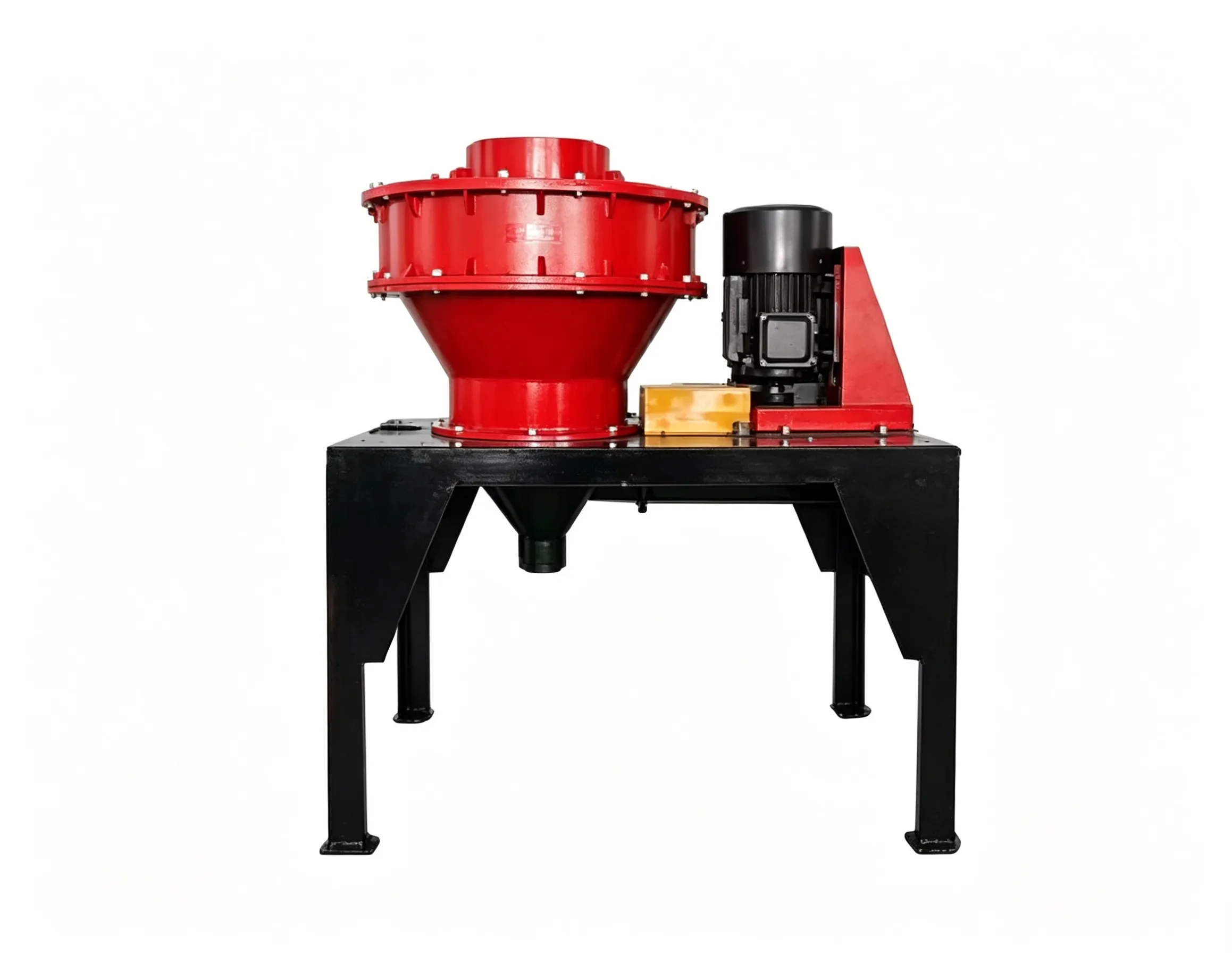
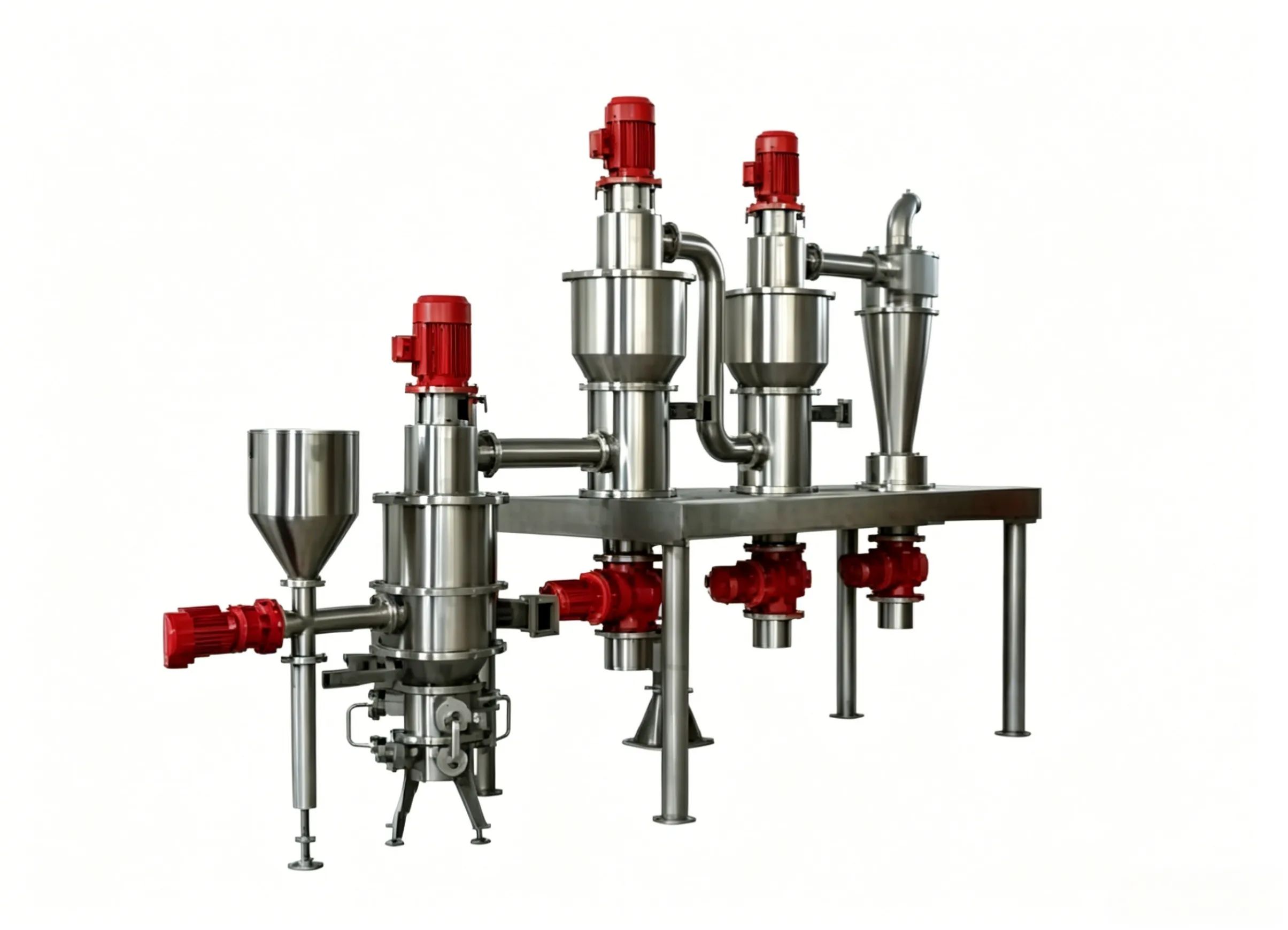
- Jet Milling: Under an inert gas atmosphere, high‑speed gas streams cause particles to collide with each other, reducing them to the target fineness.
- 3. Orientation Pressing and Isostatic Pressing – This step imparts magnetic properties to the magnet.
- Magnetic Field Orientation Pressing: The powder is placed in a die and pressed in a strong magnetic field, aligning the magnetic moments of the powder particles in the same direction.
- Cold Isostatic Pressing (CIP): The pressed compact is subjected to uniform high pressure from all directions, further increasing its density and strength.
- 4. Sintering and Aging Heat Treatment – This is the key to achieving the final magnetic properties.
- Vacuum Sintering: At high temperature, powder particles diffuse and bond together, forming a dense block blank.
- Aging Heat Treatment (Tempering): Precise control of heating and cooling cycles optimises the microstructure to achieve the best coercivity and other magnetic properties.
Stage 2: Downstream Process (Finished Product Machining)
- 1. Mechanical Machining – The sintered blank is extremely hard and must be cut and shaped to precise dimensions and forms using specialised methods such as wire EDM and centreless grinding.
- 2. Grain Boundary Diffusion (Optional) – This is an advanced heavy‑rare‑earth reduction technique. By coating the magnet surface with dysprosium (Dy) or terbium (Tb) and heating, these elements diffuse inward along grain boundaries. This significantly improves coercivity and heat resistance without substantially reducing remanence.
- 3. Surface Treatment – Since NdFeB is highly susceptible to oxidation and corrosion, protective surface coatings such as zinc plating or nickel plating must be applied.
- 4. Magnetisation and Inspection – Finally, the finished products are magnetised in a strong magnetic field. Comprehensive inspections of magnetic properties, dimensions, corrosion resistance, etc., are conducted before packaging and warehousing.
🔄 Other Process Routes
In addition to the mainstream sintering process, there are two specialised routes:
- Bonded NdFeB: Magnetic powder is mixed with resin and then injection‑moulded or calendered. The advantages are high precision and complex shapes, but magnetic performance is lower, making it suitable mainly for micro‑motors.
- Hot‑Pressed / Hot‑Deformed NdFeB: Powder is densified using hot pressing. The advantage is the ability to produce high‑performance anisotropic ring‑shaped magnets, particularly well‑suited for manufacturing motor rotors.
Producing NdFeB permanent magnets is a complex process that combines powder metallurgy, materials science, and precision manufacturing. From precise raw material proportioning, to the critical magnetic field orientation pressing, and finally the performance‑defining sintering and grain boundary diffusion, every step is full of technical challenges. It is through this elaborate process that this “king of magnets” – a cutting‑edge functional material – is ultimately created.



 English
 Spanish
 Russian
 Arabic
 Swahili
 French
 Turkish
 Portuguese
 Korean
 Japanese
 German
 Italian