The end liners (including the discharge-end liners) of a tube mill and their retaining bolts are continuously exposed to a harsh environment involving high temperature, impact, abrasion, and alternating stresses. Common failure modes include liner wear‑thinning, cracking, deformation, bolt fracture, loosening, and dust leakage. Extending their service life requires a comprehensive approach covering material selection, design, installation practices, operational control, monitoring, and timely replacement. The specific measures are as follows:
I. Optimize Liner Material and Structure
- Select materials according to working conditions
- The discharge‑end liners are subject to less impact but severe high‑temperature abrasive scouring. They are best made of high‑chromium cast iron (Cr ≥ 15%) or medium‑alloy wear‑resistant steel, which offer much better abrasion resistance than ordinary high‑manganese steel.
- If the internal mill temperature consistently exceeds 200 °C, use heat‑resistant wear steel (e.g., with Ni and Mo additions) to prevent softening due to high‑temperature tempering.
- Optimise liner geometry
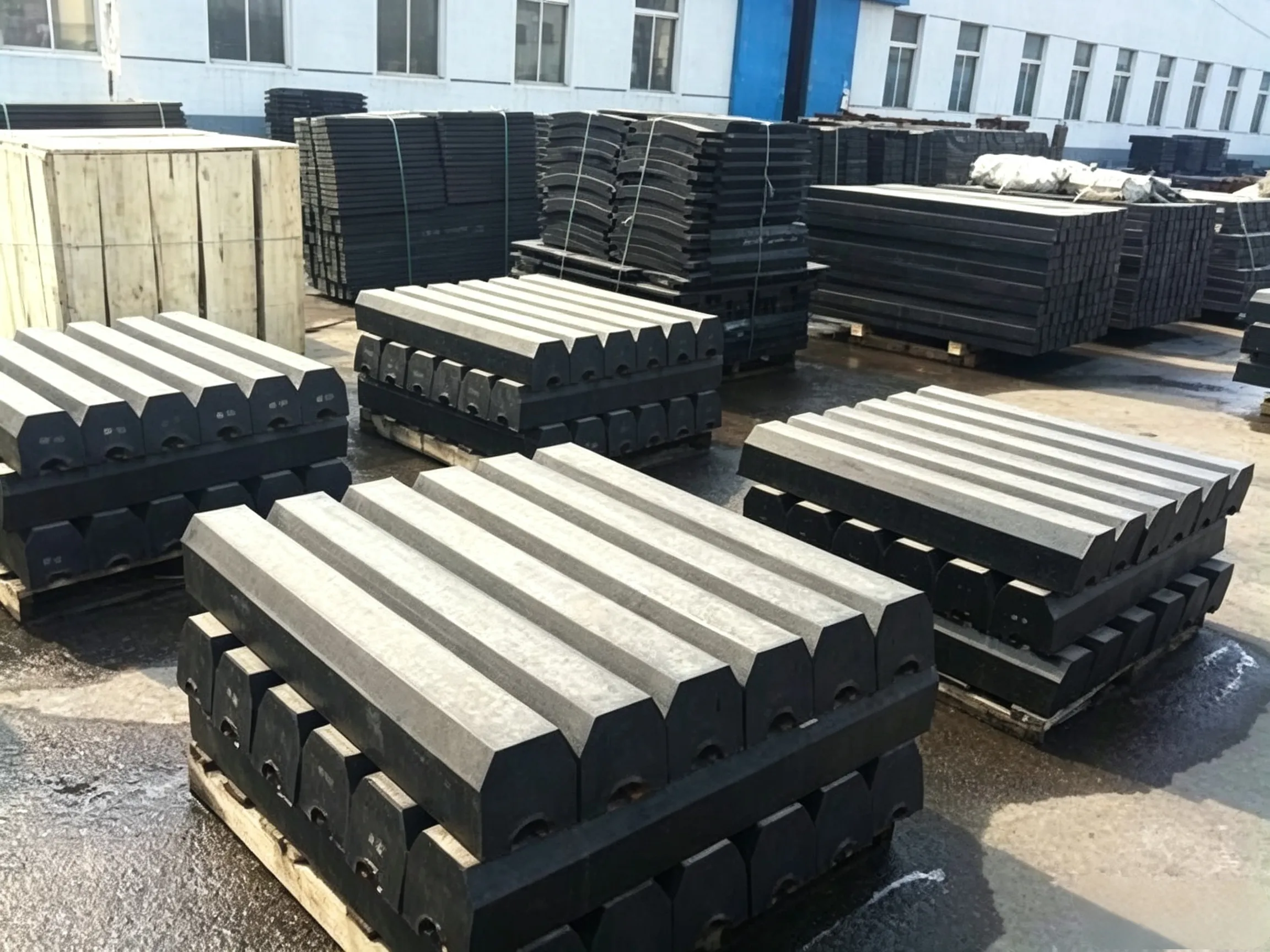
- Flat liners or small‑wave liners are preferable for the end compartment to reduce lifting height and minimise impact loads on the bolts.
- For the last ring adjacent to the discharge grate, an L‑shaped design (as shown in Figure 2.20 mentioned earlier) can be adopted, which prevents grinding media from escaping and allows bolt holes to be placed in lower‑stress areas.
- Increase liner thickness (within allowable limits) and add stiffening ribs to improve rigidity and reduce bending deformation.
II. Improve Bolt Connection Design
- Use high‑strength heat‑resistant bolts
- Bolt materials should be 40Cr, 42CrMo, or 35CrMoA, quenched and tempered, with a tensile strength ≥ 900 MPa and adequate heat resistance (operating temperature ≤ 400 °C).
- Threads should be rolled rather than cut to avoid stress concentrations.
- Anti‑loosening measures
- Use double nuts or spring washers, combined with thread‑locking adhesive (anaerobic) applied to the threads.
- Install spherical washers or tapered washers between the nut and the liner to compensate for misalignment and ensure uniform preload.
- Weld anti‑rotation lugs on the bolt head (inside the mill) to prevent loosening caused by mill rotation.
- Sealing and thermal insulation
- Fit heat‑resistant rubber O‑rings or asbestos gaskets between the bolt hole and the bolt to prevent dust leakage and reduce direct heat transfer to the bolt.
- Apply high‑temperature anti‑seize compound on the exposed threads to facilitate future disassembly and prevent corrosion‑induced seizure.
III. Standardise Installation and Tightening Procedures
- Control preload
- Use a torque wrench to tighten gradually and uniformly to the specified design value—avoid over‑tightening (which may break the bolt) or under‑tightening (which leads to impact fracture due to looseness).
- After initial tightening, run the mill for a few hours under load, then perform a hot‑retightening (since thermal expansion may reduce the preload).
- Avoid welding damage
- As previously stated for partition diaphragms, welding between end liners and the discharge grate should be avoided to prevent thermal distortion and stress concentration; rely solely on bolting.
- Chamfer bolt holes
- Ensure the bolt head and the countersink in the liner mate perfectly, removing burrs or misalignment that could cause local over‑stressing.
IV. Optimise Operation to Mitigate Severe Conditions
- Maintain appropriate material level
- Keep a suitable slag bed level (e.g., by increasing the minimum opening distance as discussed earlier) so that a layer of material cushions the impact of grinding media on the liners, reducing direct wear.
- Stabilise mill ventilation
- Adjust ventilation to avoid excessive internal temperatures (preferably < 150 °C), because high temperatures accelerate thermal fatigue and oxidation corrosion of bolts.
- If feed moisture is high, strengthen drying to reduce paste‑coating, which can cause local overheating and corrosive atmospheres.
- Rationalise grinding media grading
- Use smaller‑diameter media (e.g., Φ15–Φ25 mm) in the rear compartments to reduce impact force on the end liners while improving grinding efficiency.
V. Strengthen Daily Monitoring and Maintenance
- Regularly check tightening torque
- Every 500–1,000 operating hours, stop the mill and inspect the tightness of end‑liner bolts; re‑tighten any loose ones.
- Check for aging of sealing gaskets and replace any that show dust leakage.
- Measure liner thickness
- Periodically measure the remaining thickness of end liners with an ultrasonic thickness gauge. When wear exceeds 50%–60% of the original thickness, plan for replacement to prevent the liners from wearing through and damaging the mill shell.
- Inspect bolts for cracks
- During liner replacement, perform magnetic particle or dye‑penetrant inspection on all bolts; replace any found with cracks immediately—do not reuse them.
- Record wear data
- Keep a usage log for each end liner and bolt, recording their service lives, so as to optimise replacement intervals and material choices based on statistical data.
VI. Handle Emergencies Rapidly
If a bolt breaks but you want to extend the overall service cycle, use the “fishing method” (as described earlier) to replace the bolt quickly without prolonged downtime and entry into the mill—minimising production losses and buying time for subsequent major maintenance.
VII. Plan for Overall Refurbishment or Spare Sets
- If the end liners are heavily worn but still repairable, consider build‑up welding with wear‑resistant hardfacing to restore the surface profile (while controlling heat input).
- Keep a complete spare set of end liners and bolts for a full replacement during major overhauls, avoiding piecemeal replacements that may cause mismatching.


 English
 Spanish
 Russian
 Arabic
 Swahili
 French
 Turkish
 Portuguese
 Korean
 Japanese
 German
 Italian